

behavioral health integration

Integrated Care Thought Leader Series: Dale Klatzker, PhD

The Times, They Are a-Changin’

When Bob Dylan wrote this iconic song, many felt that it captured the spirit of social and political upheaval of the 1960s, much in the same way that we view mental health as “a-changin’.”  And these changes require mental/behavioral health providers to change the manner in which they deliver services.

Reports over the past decade have brought attention to the current mental health crisis:

In addition, over the past few years far too many catastrophic events have brought attention to this mental health crisis, resulting in a public outcry, demanding that changes are made to prevent future tragedies.

But change isn’t easy.

The relatively brief history of community mental health services has been a challenging one. Just a few months ago, as we celebrated the 50th anniversary of President John F. Kennedy’s signing the Community Mental Health Bill into law, the conversations quickly progressed to the subject that is on the minds of virtually all behavioral health providers—and an unusually large number of the general public and policy makers, given the historical lackluster interest in the topic—mental health is in dire need of change.

The economic downturn in the US in 2008 resulted in massive budget cuts in all but a few states. The March 2011 NAMI report, State Mental Health Cuts: A National Crisis, demonstrated the cumulative cut to mental health services in the U.S. during that time was nearly $1.6 billion. Community mental health services plummeted from being barely adequate to the critical point in many states. Safety-net providers were forced to close programs due to the slashed budgets. Many of those affected ended up on the streets or in jail.

The recent announcement on the anniversary of the Sandy Hook tragedy, of the planned infusion of dollars into help repair our broken mental health system, is encouraging. However, the entire mental health system is in dire need of an overhaul. One that looks at the broader healthcare picture and strategically plans for mental health and substance use disorder treatment to be included. A person-centered, whole health approach to treatment is necessary for improving the patient experience of care; improving the health of populations; and reducing the per capita cost of health care: the Triple Aim.
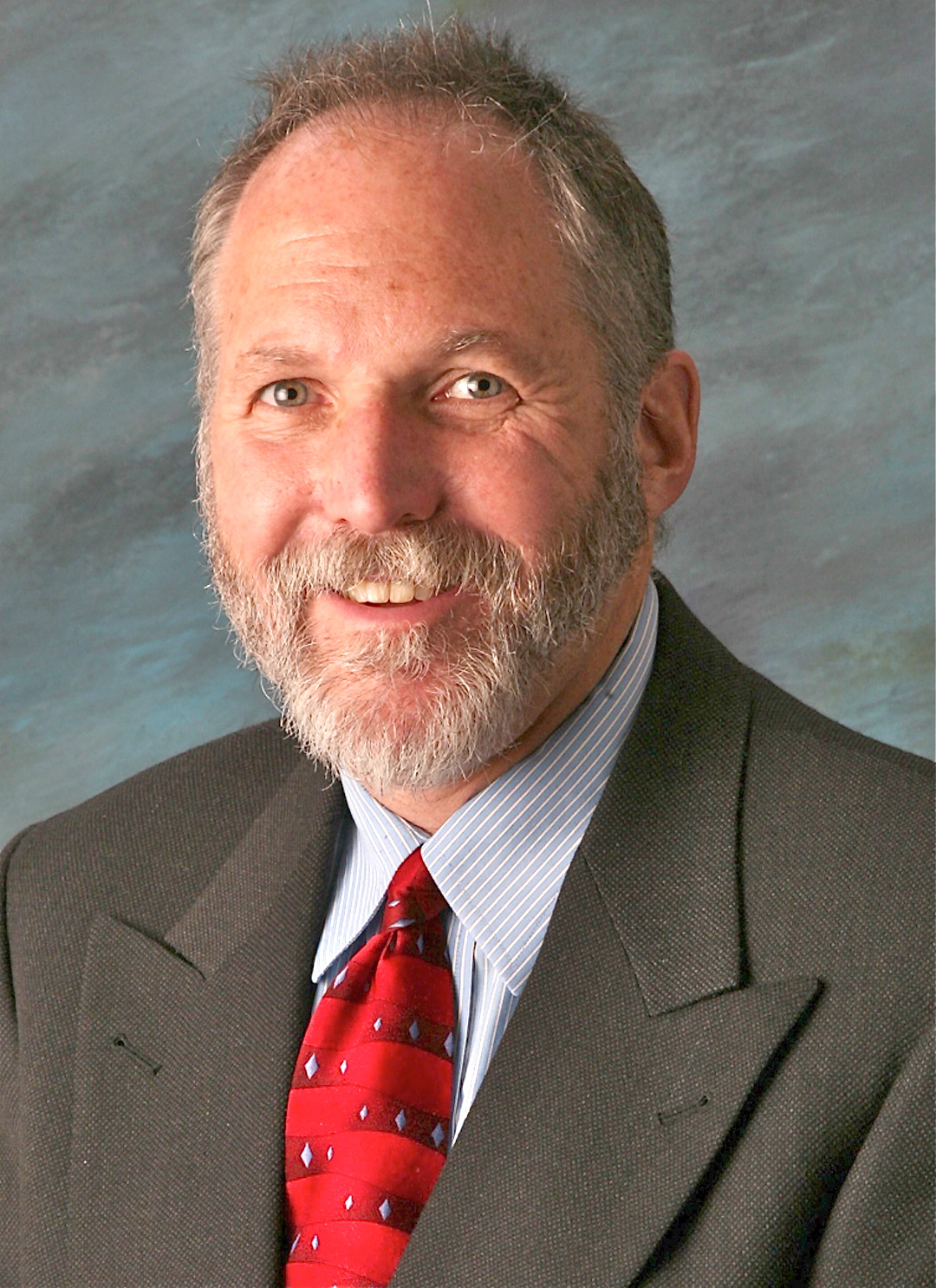
Dale Klatzker, PhD
Dale Klatzker, PhD

Dr. Dale Klatzker knows that, although it isn’t easy, change is vital for community behavioral health providers.

It’s exciting to be able to offer a look at integrated care from the perspective of a provider, particularly a provider who has demonstrated leadership excellence in integrating behavioral health and primary care services. Dr. Klatzker currently serves as the Chief Executive Officer of The Providence Center in Providence, Rhode Island. He has been a leader in behavioral healthcare for more than 35 years. Since becoming president/CEO of The Providence Center in 2004, Dr. Klatzker, a visionary, has transformed the system of care, quality of service delivery, and social policy decision making at The Providence Center and the state of Rhode Island.  Click here for Dr. Dale Klatzker’s bio.

The Providence Center and the Providence Community Health Centers have created a successful partnership to meet the whole-health needs of the people they serve within their community; a need that is clearly outlined in the literature. According to the Robert Wood Foundation’s Mental Disorders and Medical Comorbidity authored by Dr. Benjamin Druss and Elizabeth Walker, comorbidity between medical and mental conditions is the rule rather than the exception:

In 2002, more than half of disabled Medicaid enrollees with psychiatric conditions also had claims for diabetes, cardiovascular disease (CVD), or pulmonary disease, substantially higher than rates of these illnesses among persons without psychiatric conditions. The authors conclude that the high prevalence of psychiatric diagnoses among people with chronic medical conditions should be an impetus for prioritizing the improved integration of behavioral and medical care.

What advice do you have for healthcare leaders?

Dr. Klatzker:  Change is a good thing. Most CMHCs haven’t changed a lot. They haven’t prepared themselves to change a lot and have marginalized themselves and the people that they serve by not being more a part of the mainstream. We have sets of skills that are integral to wellness and to health across a wide spectrum. We need to be proud of what we do, but also to expand it and extend it because this is the perfect time for this. We have a lot of things to offer that others are trying to replicate.

Things don’t stay static. You have to look though the windshield but also through the rear-view mirror. You have to know where you are but you also have to know where you’re going.

As executive director/CEO of a behavioral health organization, you have the obligation to push yourself, and that will push your organization, to do what is necessary so that your mission is reinforced but also to serve the needs of the community. It’s hard to do that if you’re doing the same thing you did 20 years ago. We do our consumers a disservice if we do that.

Person-centered approach to care

Dr. Klatzker: What we’ve embraced here – what’s part of the DNA of the organization at The Providence Center – we  believe in a person-centered approach to care. No two people are exactly the same. The people that we work for deserve as much access to a wide array of both health and social supports as anyone. That’s how you have to guide yourself. When you’re thinking of those things, primary care integration, working much more toward the mainstream of traditional healthcare is imperative for us.(7:14)

What we’ve found is, if you can build those relationships and find the right connections, then others will embrace you and value you for what you bring to the table. In fact, we bring a lot. Partnership is always the first choice, the default.

We don’t chase dollars, we don’t create programs because it’s the idea du jour from some funder somewhere, we consciously look on our mission as our touchstone and build upon that to provide as much choice to the people we serve. We can be very person-centered because there aren’t many gaps in what we’re providing. (They provide a wider array of services than the average CMHC) We’ve consciously built out a wide array because we think it’s the right thing to do. Rather than to take a “no,” if we can’t partner, we build.

Example of a successful integrated care partnership

Dr. Klatzker: The Providence Center is closely connected to one the largest federally qualified health center in the state of Rhode Island, the Providence Community Health Center. We have become the largest community mental health center. Neither had a desire to replicate the services that the other provided. Over the years we’ve built this into a “no wrong door” integrated collaborative effort so that in the mental health center, the FQHC runs a full-service practice with 1100-1200 patients. In the FQHC, we are integrated in their physician practices building and we also have a separate section of their building where we provide longer term care and some other types of specialty care. We’ve integrated our records with each other. We meet frequently to process and to try to figure out how to make our care efficient and effective. We are working closely with them now on adopting our health home model to integrate a modified health home into the FQHC.

Yes, the times they are a-changin’. And so are healthcare providers. (At least the forward-thinking providers like The Providence Center.) They are heeding the findings from the numerous expert reports and research. They are thinking outside the box, adopting a person-centered approach that enables better outcomes for the many who place their trust in them—trusting them to take care of their whole-health needs.


Affordable Care Act · behavioral health integration · health care reform · Integrated Care

Historic Parity Ruling Provided at Long Last

“We know so much more today, and yet the problems are still very much the same, with one exception: Recovery.  Twenty five years ago, we did not dream that people might someday be able actually to recover from mental illnesses.  Today it is a very real possibility.”  ~Former First Lady Rosalynn Carter

History was made today at the Carter Center in Atlanta. Health and Human Services Secretary Kathleen Sebelius made a long-awaited announcement at the 29th Annual Rosalynn Carter Mental Health Policy SymposiumHealth insurance companies must cover mental illness and substance abuse just as they cover physical diseases. Secretary Sebelius’s speech  may be read here in its entirety.

In 2008, Congress passed the Paul Wellstone and Pete Domenici Mental Health Parity and Addiction Equity Act, marking an important step forward in efforts to end discrimination in insurance coverage for mental health and substance use disorder treatment. While the act closed several loopholes left by the 1996 Mental Health Parity Act, it has taken five years to finalize the law. The 2008 act lacked clarity on how parity is to be achieved, particularly when treatment involves intensive care at physician offices or long-term hospital stays.

Today’s ruling provides clarification on how parity applies to residential treatments and outpatient care. It also ensures that copayments, deductibles, and limits on mental health benefits are not more restrictive or provide less coverage than those for medical and surgical benefits, including geographic or facility limitations. These have been tremendous barriers to treatment thus far and represent a significant triumph for the behavioral health community.

“This is the largest expansion of behavioral health coverage in a generation,” declared Secretary Sebelius. Addressing the need for adequate care for mental health has been a goal for more than 50 years, when President John F. Kennedy signed the Community Mental Health Center Act of 1963 into law.

At long last, treatment for behavioral health disorders is regarded as equal to other types of healthcare. This represents a significant achievement in behavioral health and should contribute to the ongoing effort to reduce the stigma. Millions fail to follow up with needed treatment because of stigma. With this final ruling and with movement toward integrated care, we will finally be able to improve access.

What will the world be like when people begin to actually receive that needed treatment?

behavioral health integration · behavioral health primary care integration · collaborative care · primary care behavioral health integration

Integrated Care Thought Leader Series: Alexander “Sandy” Blount, EdD

“It’s very hard to do integrated care and still think of mental health and physical health.”

Welcome to the first in the Integrated Care Thought Leader Series. This series will focus on the forward-thinking individuals who have had the foresight to envision possibilities in the healthcare industry’s future. I’m pleased to begin the series with a man who has been instrumental in advancing integrated healthcare.

Alexander Blount, EdD

Alexander Blount, EdD, better known to most as “Sandy,” has played a very important role in bringing the integration of behavioral health and primary healthcare to its current prominent focus within the healthcare industry. Dr. Blount is credited with coining the term integrated primary care in his 1994 publication, “Toward a System of Integrated Primary Care,” Blount A, Bayona J. Family Systems Medicine, 1994;12:171-182.

He currently serves as Professor of Clinical Family Medicine and Psychiatry at the University of Massachusetts Medical School in Worcester, MA and Director of Behavioral Science in the Department of Family Medicine and Community Health.  He teaches resident physicians the psychosocial skills of primary care practice and founded the post-doctoral Fellowship in Clinical Health Psychology in Primary Care.  He was previously Director of the Family Center of the Berkshires in Pittsfield, MA and a faculty member at the Ackerman Institute for the Family in New York. He has more than thirty-seven years experience as a therapist, teacher of physicians and therapists, administrator and lecturer in the US and abroad.  He is a member of the National Integration Academy Council and has had a leadership role in state and national efforts developing healthcare policy.  His books include Integrated Primary Care: The Future of Medical and Mental Health Collaboration published by W. W. Norton and Knowledge Acquisition, written with James Brule’, published by McGraw-Hill.  Click here for more information about Dr. Blount.

It’s an honor to talk with Dr. Blount about the integration of behavioral health and primary care. Yes, he admits that he is optimistic about the direction in which the field is moving! His enthusiasm is almost palpable, with a freshness that belies the number of years he has devoted to the advancement of this revolutionary approach to healthcare. It’s apparent that this enthusiasm easily holds the attention of the students he teaches at UMASS.

Dr. Blount is a visionary whose diligent efforts and perseverance have made great strides toward bringing attention to the widespread failure to address the individual patient as a whole. He graciously agreed to provide insights for Behavioral Health Integration Blog:

What do you see as being the greatest barriers for successful integration of behavioral health and primary care services?

Dr. BlountI see two things:

First are the barriers that have always been there: regulatory barriers that are built on the idea that mental health and medical services have to be kept separate, financial barriers that only pay fee for service and define services as what is delivered in specialty mental health, and cultural barriers on the part of both medical and mental health people that make working together difficult without some cultural broker who can make the connections and translations necessary.  These have been our problems historically, and happily with the ACA and the PCMH movement, these are reducing.

The second area is the barriers caused by our own success.  Because integrated care is becoming more possible and is proving itself, there is pressure to start programs in settings where there is little understanding of what it entails and little time and resources to prepare for the change.  People are getting put into integrated programs or co-located, who aren’t trained for it and didn’t pick it. They don’t know what to do. They go in and do specialty mental health. They do what they’ve been trained to do…and it doesn’t work. Then administrators, who may have been skeptical initially, thought this was a fad, see this failure and think “oh yeah, I was right,” it was more inconvenient than useful. We felt we had to develop a training program at UMass Medical School available to these folks to prevent just this form of failure.

Also because there is sometimes a faddishness about integration, you get some administrators who become “true believers” who really don’t know how to do this. They see a presentation,  and they say this is what we are going to do–and they start it without any depth of understanding. It’s sort of the administrative version of the clinician that doesn’t work. We need clinicians who are fully oriented to integrated primary care and leaders who are aware of the difficulties of making these changes and who can develop the buy-in from the whole practice. Integrated pilot programs are often funded on three year cycles.  Places like the DIAMOND Project in Minnesota, where they’ve had some real time to make it work, say that it’s more like a five year cycle from beginning to fully transformed practice.  I fear that federal and private funders will think it will happen faster than it does and will turn away.

Another barrier to our success is the workforce crisis we are facing.  All of the government projections of what will be needed for behavioral health workforce, when compared to the number of people who are being trained, say we will have a terrible deficit, and those projections were made without any calculation of the workforce that has proved to be needed in mature integrated settings.  When word gets out that we will need a four-fold increase over 2010 levels in behavioral health clinicians in Federally Qualified Health Centers alone, not to mention the rest of the health system, the true magnitude of the problem will become clearer.

What excites you about the field today?

Dr. Blount: One, is absolutely the transition in payment models that may make a great leap forward happen. Essentially those models let us implement the clinical routines of integrated care. Up to now the payment models have dictated routines that weren’t very integrated.  Paying for health, rather than for services allows us to deliver evidence based care by the clinician best able to do it at the point that it is most sensible and acceptable to the patient.   Having it actually knitted into the flow of care makes a big difference.

And the other thing that I see happening is a transformation in how we conceptualize mind and body, illness and health.   It’s very hard to do integrated care and still think of “mental health” and “physical health”. The categories just begin to break down because they don’t describe the way people present. They don’t describe how problems form over the years. We’ve had science now for a good while on the plasticity of brain and the way that experience changes the brain and the brain changes experience. The current science even describes the way that experience changes what genes are expressed at various points in a person’s development.  In other words, the science of the brain has been there but the way of thinking in our day-to-day clinical lives has not because we have been enacting models build on conceptions of separate domains.  As we enact integrated clinical routines, we will begin to think differently.  We create the likelihood that the science of the brain will be mirrored in the unity of our conceptions about people and how we try to help them.

So I think, at least in the places that are more developed, the places that integrated care gets to be mature, you begin to see different forms of conceptualization and hopefully we’ll be documenting those, writing about those, helping to pull others along. There aren’t many places where integrated care is really mature. The places that are mature are very different in numerous ways that don’t initially seem to be connected to integration. The question of “isn’t integration interesting, how do we work on it?” just goes away and the questions are about new ways of helping patients, new groups of patients we can understand better, and new ways of involving patients on their care teams.  How we involve people in their own care, how we get past the doctor as leader and authority to doctor and the team as teachers and facilitators, that’s really the next piece. And when that is going well, I think that integrated care will sort of already be there.

Will you look into your crystal ball for us and tell us what you foresee in the future for integration?

Dr. BlountLet’s imagine that we get it right in terms of mature programming, mature routines of integration as far as our workforce allows.  Then we begin to be able to think about health and illness differently, and the whole set of concepts, the models that we have of understanding health and illness and how to influence those begin to move. I foresee the time when there’s a foundation of mature integrated care that we will be looking at great leaps forward in theory or great research leaps forward with greater understanding of what and how we should be researching. That’s one optimistic thing.

And when I look in my crystal ball I think we are going to have states that begin to have whole-state programs that are starting to be implemented and organized so that we can begin to look at the impact of integration on a really big scale.

Thanks so much to Dr. Blount for sharing his insights in the premiere of the Integrated Care Thought Leader series!

Check back soon for a conversation on integrated care with Benjamin Druss, MD, MPH, Rosalynn Carter Mental Health Chair and Department of Health Policy and Management Professor at Emory University.

Affordable Care Act · health care reform · healthcare integration

Health Care Reform: The Affordable Care Act and Healthcare Integration

The Supreme Court decision on June 28, 2012, delivered approximately 10:15am EDT, is a boon for healthcare integration. (Though it was scary there for a few minutes when certain hasty, overanxious members of the media provided the wrong results!)

For the past few years, community behavioral health and primary care organizations have been working collaboratively to provide services for the people they serve, diligently trying to create the perfect formula for doing what is best for the healthcare needs of the people they serve, while at the same time striving to remain financially solvent. And they have done a remarkable job! But it isn’t easy…nor have their outcomes always been ideal, largely due to limited resources. Certainly not for lack of trying!

These benevolent community providers are charged with serving the most in need. This does not always translate into being adequately compensated for their efforts, however. While some have been forced to limit their services, most have managed to avoid rationing thus far through their persistence in seeking alternatives, such as creating referral agreements, co-locating, full integration, and with grant funding. In addition, many have engaged in advocating for change at the local, state, and national levels. These tenacious providers recognize that an unwavering focus on the mission is the foundation for success.

With the newly upheld Affordable Care Act, more people will have access to healthcare coverage and will not be rejected because of pre-existing conditions. Also, for the states that don’t opt out of the new Medicaid expansion, all residents below the 133 percent of the poverty line will be eligible for Medicaid coverage. Therefore, more of the people served by community providers who were previously uninsured will have healthcare coverage. This will allow the providers to be compensated for more of the services they provide, thus supporting the mission.

The ACA doesn’t provide all the answers but it is a move in the right direction. Politics aside, our healthcare system isn’t working the way it is. We need major changes. We already know that integrating behavioral health and primary care services is more economical and provides improved health outcomes. Through these health homes, individual care is coordinated. That just makes sense.  The health home approach translates into better care for fewer healthcare dollars. This is a perfect opportunity to build on a successful model.

Read the AMA Commentary by Dr. Jeremy Lazarus, AMA president, on the benefits of the ACA on healthcare integration.

With our newly upheld Accountable Care Act at the cusp of our nation’s 236th birthday, it’s a perfect time to pull together and focus on building a system that allows us to provide effective services to meet the total healthcare needs of people with behavioral health concerns in this, the land of the free and the home of the (soon t0 be) healthy.