Affordable Care Act · behavioral health integration · health care reform · Integrated Care

Historic Parity Ruling Provided at Long Last

“We know so much more today, and yet the problems are still very much the same, with one exception: Recovery.  Twenty five years ago, we did not dream that people might someday be able actually to recover from mental illnesses.  Today it is a very real possibility.”  ~Former First Lady Rosalynn Carter

History was made today at the Carter Center in Atlanta. Health and Human Services Secretary Kathleen Sebelius made a long-awaited announcement at the 29th Annual Rosalynn Carter Mental Health Policy SymposiumHealth insurance companies must cover mental illness and substance abuse just as they cover physical diseases. Secretary Sebelius’s speech  may be read here in its entirety.

In 2008, Congress passed the Paul Wellstone and Pete Domenici Mental Health Parity and Addiction Equity Act, marking an important step forward in efforts to end discrimination in insurance coverage for mental health and substance use disorder treatment. While the act closed several loopholes left by the 1996 Mental Health Parity Act, it has taken five years to finalize the law. The 2008 act lacked clarity on how parity is to be achieved, particularly when treatment involves intensive care at physician offices or long-term hospital stays.

Today’s ruling provides clarification on how parity applies to residential treatments and outpatient care. It also ensures that copayments, deductibles, and limits on mental health benefits are not more restrictive or provide less coverage than those for medical and surgical benefits, including geographic or facility limitations. These have been tremendous barriers to treatment thus far and represent a significant triumph for the behavioral health community.

“This is the largest expansion of behavioral health coverage in a generation,” declared Secretary Sebelius. Addressing the need for adequate care for mental health has been a goal for more than 50 years, when President John F. Kennedy signed the Community Mental Health Center Act of 1963 into law.

At long last, treatment for behavioral health disorders is regarded as equal to other types of healthcare. This represents a significant achievement in behavioral health and should contribute to the ongoing effort to reduce the stigma. Millions fail to follow up with needed treatment because of stigma. With this final ruling and with movement toward integrated care, we will finally be able to improve access.

What will the world be like when people begin to actually receive that needed treatment?

behavioral health integration · Integrated Care

Celebrate Mental Illness Awareness Week, World Mental Health Day, and National Depression Screening Day

20131010-185449.jpg
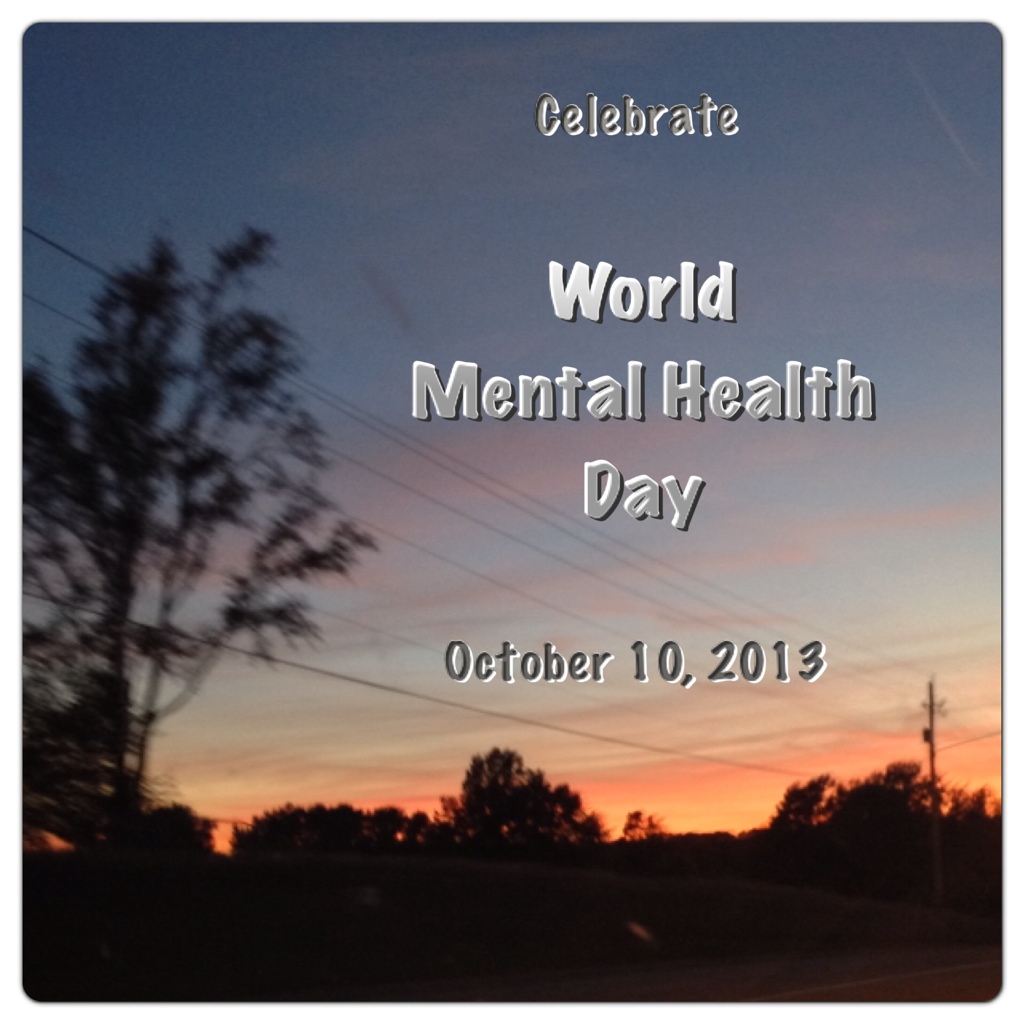
Celebrate World Mental Health Day 2013

This is Mental Illness Awareness Week and today has been designated as both World Mental Health Day and National Depression Screening Day. Social media has numerous posts this week promoting mental health awareness and related topics as we try to educate the general public. We strive for increased awareness of the importance of good mental health as well as the challenges related to the stigma surrounding mental illness.

Integrating mental health and substance use disorder treatment with primary healthcare provides the opportunity to both increase awareness and decrease the stigma associated with behavioral health issues. Integrated care helps to improve access, reduce costs, and improve outcomes. Integrated care is better care!

In 1990, the U.S. Congress established the first full week of October as Mental Illness Awareness Week (MIAW) in recognition of the National Alliance on Mental Illness’s (NAMI) efforts to raise mental illness awareness. Since then, mental health advocates across the country have joined with others in their communities to sponsor activities, large or small, for public education about mental illness.

Today, 10/10/13, is designated as World Mental Health Day. This year’s theme is “Mental Health and Older Adults.” The day is celebrated at the initiative of the World Federation of Mental Health (WFMH) and the World Health Organization (WHO) supports this initiative through raising awareness on mental health issues using its strong relationships with the Ministries of Health and civil society organizations across the globe.

Today is also National Depression Screening Day. National Depression Screening Day raises awareness and screens people for depression and anxiety disorders. NDSD is the nation’s oldest voluntary, community-based screening program that gives access to a validated screening questionnaire and provides referral information for treatment. More than half a million people each year have been screened for depression since 1991.

Let us work together to promote good mental health locally and around the world.

behavioral health integration · behavioral health primary care integration · collaborative care

Mental Illness Awareness Week: Raising Awareness of the Need for Integrating Behavioral Health and Primary Care Services

Mental Illness Awareness Week, October 7 – 13, 2012

In the US the first week of October has been recognized as Mental Illness Awareness Week since 1990 when it was established by Congress in recognition of the National Alliance for Mental Illness’s efforts to increase public awareness about mental illness. Mental Illness Awareness Week also coincides with similar organizational campaigns:

There is no doubt that this campaign has been a successful one, raising awareness, encouraging people to screen for depression, and chipping away at the negativity surrounding mental illness. This theme is aligned with the philosophy of behavioral health integration. Therefore, perhaps a day can be designated for recognizing the importance of integrating behavioral health and primary care services. When physical health and behavioral health are addressed concurrently, people have better health outcomes and are better satisfied with their healthcare services. Integrated healthcare also offers improved access to services and reduces healthcare costs.

Integration has been referred to as the neck; a means of reconnecting the mind and body. In integrated healthcare, the mind and body are addressed as a whole, rather than compartmentalized. There is a focus on prevention and wellness that promotes improved health outcomes. Across the United States and around the world, behavioral health and primary care providers are transitioning service delivery to a more collaborative approach. The United States Department of Health and Human ServicesSubstance Abuse and Mental Health Services Administration has invested in nearly 100 initiatives in their Primary and Behavioral Healthcare Integration grants. This commitment demonstrates the importance placed on integrated healthcare by the United States.

Perhaps we can designate each Friday of Mental Illness Awareness Week as National Behavioral Health and Primary Care Integration Awareness Day.

What do you think?

behavioral health integration · behavioral health primary care integration · collaborative care · healthcare integration · primary care behavioral health integration

UPDATE: The Greatest Challenges for Integrating Behavioral Health and Primary Care Services

The recent poll conducted via the LinkedIn group, Behavioral Health Integration, continued to generate thought-provoking comments following the last post. (Click here to see the initial results.) Thought-leaders, behavioral health, and primary care professionals have offered their perspectives on the pressing question:

WHAT IS THE GREATEST CHALLENGE FOR INTEGRATING BEHAVIORAL HEALTH AND PRIMARY CARE SERVICES?* 

Mark L:  Community health records (CHR) that follows the patient and not the provider or payer source will create the sustainability –finance and billing that aid Partnerships to create better operations/workflow that in turn solve workforce issues.
I think the solution for integration of health care is an IT solution that allows for communication not in any “one” silo but in a cloud, it is the premise of the question about integration that it will be in a silo that leads to obsolescence or a least does not address systemic issues of communion about the actual needs of the patient first.

  1. Providers at all levels of care need to exchange information both horizontally and vertically, such as a transfer of care to another provider at a higher or lower level of care. Also community integration of available resources for discharges from one provider to the next or transitions to the public systems from private system or vice versa.
  2. The public and private sectors need to work together to “speak the same IT Language” the health record should follow the person in any system.
  3. Acute care and mental health care systems need the same ability to communicate, whether or not you call the person a client or patient. Mental health and acute care providers can then communicate and bill on a “continuity of care” coordinating treatment for a patient as a team and not in silos.
    The export of data from one CHR to the next is where standardization needs to be the focus. I am excited to see future of blending of Regional Health Information Organizations (RHIOs), Health Information Exchange (HIE). RHIOs and HIE are changing the discussion from silos to clouds.

Leslie B: This may be one of my favorite topics. Yes, I agree that IT can play a part of it, but that is not the only part of the system that needs to change. Like one of the members of discussion, the providers and their ability to talk to each other is one. Program Development requires system and staff changes, changes in thinking, and the ability to assess each site. Each Primary care setting has its own challenges, so one can say provider insight at one location and Behavioral Health provider readiness at another location and yet another location might have the inability to see each other’s records or there may be a staffing problem. I think the biggest challenge can be who is going to pay for it, once everybody in the system figures out what it is anyway. It may require more behavioral health providers and more medical providers. Will there really be a return on that investment. The patient would probably get more holistic care, but it isn’t going to cost any less money.

Bob H:  I believe that one of the greatest challenges is that we need to stop talking about behavioral health and primary care and begin focusing on the needs of the individuals receiving our services and how our systems can best serve their needs. We need to include clear measures of ‘behavioral economics’ and understand that we all act and react to rewards and benefits. We need to structure our systems and our interventions to incentivize overall health improvements, whether behavioral or medical.
We will only have truely intregrated care when we are patient centered and stop distinguishing between behavioral health and primary care. That does not mean that we will not have specialists; whether they be psychiatric, medical, communication, design, or information and technology. It is all about the focus on the patient’s needs and building workflows to address those needs appropriately to assist them in reaching productive and effective outcomes as a result of our services and interventions.

Nelson B: In short, the greatest challenge of healthcare integration is getting paid for effective services. Coleman Professional Services will look at the best outcome of our customer; their health, their ability to have stable living conditions, volunteering or employed and their ability to appropriate socialize in their community. Let’s look at the outcome for our customer and get paid for this outcome.

Michael J: Reading this thread shows that there is a great deal of thought being put into this topic. I think that some of this boils down to a chicken and an egg. And Nelson is right on target about the pay systems. We in our industry have not truly integrated mental healthcare and addictions treatment. Now I know there are pockets of good co-occurring treatment programs here and there, but as an industry they continue to be separate. And the biggest reason is following the money. The money for these services are not braided, and so they stay separate.
I’m currently working on a perinatal mental health integration project. We know what to do clinically (we are using the IMPACT model) and we have OBs who want to participate. We have Medicaid insured women we have identified as needing care. But since the Medicaid is carved-out, the physical health Medicaid plan will not pay for the service as they don’t pay for MH services, and the MH plan won’t pay because they don’t purchase physician services from non-psychiatrists unless they are credentialed as a part of a licensed agency with a MH contract. If the insurance companies and the government wanted to have integrated healthcare, they would have it. If there was a requirement that integrated care was insisted upon for reimbursement we would be all over it. In fact, we do all sorts of odd things now to respond to external requirements that have absolutely nothing to do with the delivery of care. So I have to believe that once the system starts demanding integration it will have it. The system gets what the market commands. The reason there are no solid IT solutions that can incorporate MH and PC is because the market doesn’t demand it. But vendors will respond when that’s required or they will be out of business, just like we would be if the demands were levied upon us and we didn’t respond.

Bob F: This has been a great discussion Cheryl – thanks for posting it. I read the responses from the other groups where you posted this question as well. It seems there isn’t necessarily an individual “biggest” challenge that organizations face versus as much as a varying number or group of issues that organizations face depending on a variety of factors: state environment, organizational structure, readiness to change, internal infrastructure, willing partners, etc. One of the keystones of integrated care is that our patients come to us fully assembled, and our treatment/wellness/prevention response to them has to be, in turn, as fully assembled in order to be effective. And efficient. Clearly the challenge we face in just about every region of the country is that the obstacles are likewise effectively assembled. At Cherokee Health Systems here in TN – even after running an integrated system for over 30 years new challenges surface all the time, chief among them payers who shift priorities from contract to contract, workforce (less primary care docs and psychiatrists all the time), finding time to be innovative in the development of such practices as telehealth, telepsychiatry and telepharmacy, etc. When we do our training academies we focus on all of these issues – administrative, operations, financing, workforce, PC-BH collaborations, model development – because we understand that it is almost never a single obstacle. Anyway – great to follow along and see the efforts being undertaken out there!

David R: New EMR processes are forcing medical case management accountability. Behavioral health case management processes are a generation behind medical and will require a sizable accountability shift for clinical participants.

*The question was also posted in these LinkedIn groups: Behavioral Healthcare Magazine Group, Mental Health Networking, The Friends of SAMHSA.

The poll results demonstrated a shift: with 44 total votes, Partnership has demonstrated a considerable increase, closing the gap on Sustainability.

POLL RESULTS:

Sustainability — finance and billing           38%

Partnership issues                                           31%

Workforce issues                                              7%

HIT issues                                                         5%

Operations/workflow issues                         18%

Without a doubt, each of the five factors is very important for successful integration. The next blog post will take a look at overcoming these challenges.

What do YOU think is the greatest challenge for integrating behavioral health and primary care services? Please send your comments to BehavioralHealthIntegration@gmail.com or visit Behavioral Health Integration

behavioral health integration · behavioral health primary care integration · collaborative care · healthcare integration · primary care behavioral health integration

The Greatest Challenges for Integrating Behavioral Health and Primary Care Services

In a recent poll conducted via the LinkedIn group, Behavioral Health Integration, this question was posted*:

What is the greatest challenge for integrating behavioral health and primary care services? 

POLL RESULTS:

Sustainability — finance and billing           50%

Partnership issues                                          23%

Workforce issues                                             11%

HIT issues                                                          3%

Operations/workflow issues                        11%

The question produced a number of excellent comments that are listed below. Obviously there are differing opinions about the greatest challenge for integration. The most important factor is that the healthcare community is actively thinking about this very important topic! There is no easy solution. However, as long as we continue to move forward we will establish the path to success. It’s a challenge that is worthy of our efforts. We WILL make a difference.

What do YOU think is the greatest challenge for integrating behavioral health and primary care services? Please send your comments to BehavioralHealthIntegration@gmail.com or visit Behavioral Health Integration

Peggy H:  Hmmmm. And possibly beneath it all is the issue that both systems are needing to care for an overwhelming number of people, with increasingly complex needs, in the first place. I have only recently joined, but am eager to learn more about how policy, the priorities it sets and the direction it gives to financing, is shaping critical features of integration efforts.

Joseph B:   In my mind, until the silo mentality for benefit and payment is integrated, there can not be true clinical integration. In settings where integrated payment has been settled (VA, Kaiser, ACOs), all other issues solve themselves.

I believe that carved-in, risk sharing financial models are the solution to integration

Bob F:  I think Dr. B is directly on target. Risk sharing models – capitated systems, shared savings models – can encourage better integration between modalities. Fee for service and carve outs fail to capture the true essence of integration – the vital “almost billable” services like warm handoffs, hallway consults, follow up phone calls, and the treatment team meeting; not to mention the varied allowable services among the states pertaining to same-day billing, discipline/credential requirements, etc. Trying to pound the traditional mental health square peg (with all of its burdensome documentation requirements) into the primary care round hole is not the answer – and just pounding harder with a bigger hammer is definitely not the answer.

Lena Z:  I work for a pediatric health care system in Texas and we have only been able to deliver this type of service under grant funding…which was recently stripped away prematurely by the state of TX.

Bob F:  It’s frustrating, isn’t it Lena? What we’ve found in TN is that it’s all about what you negotiate in your contract; the payers have latitude to “turn on” certain codes, allow for different funding arrangements/systems – but the provider has to be able to have the data and show the outcomes. The payer can also do some cost comparisons of your services versus your neighboring providers/competitors – that is the key. If you can get them to share their data in comparison with yours and can show those savings and improved outcomes – you have better leverage. We also learned that we were never going to be in a position to negotiate until we had a big enough member panel. It’s a battle well worth fighting – and one that is never truly won. Or lost.

Cheryl H:  Each of the issues can and often does create barriers for behavioral health and primary care integration. Sustainability is the area in which most providers tend to focus for obvious reasons: No margin no mission. However, too often concern over sustainability becomes the primary focus, diverting attention from the other issues causing them to be neglected:

  • Partnership issues have brought about the demise of many promising partnerships. For long-term success, behavioral health and primary care partners must address establishing the mission for the partnership; identify a common language; maintaining pacing, flexibility, and capacity; develop shared solutions; determine expectations; delegate trust; create empowerment; and measure outcomes.
  • Workforce issues can create significant barriers to successful integration. Service provision in the integrated environment varies greatly from services provided in traditional behavioral health and primary care organizations. Training programs for current and future workforce is necessary for long-term success.
  • Health information technology issues create significant challenges for healthcare integration. Challenges created when partners have incompatible electronic records and other issues with record sharing inhibit successful integration.
  • Operational issues such as workflow can impact productivity, creating further challenges to sustainability.

With commitment among all stakeholders, successful integration of behavioral health and primary care can be accomplished. The resulting improvement of health outcomes for people with behavioral health disorders makes it worth all the effort.

Cindy M: As I think about this and read all your comments, I’m now thinking that the biggest challenge depends a lot on the people who are facing that challenge. I voted “workforce” because I’ve thusfar been able to find ways to deal with the silos in the back office so that they are transparent — or CAN be, at least — to the clients and possibly even the service delivery staff.

The biggest problems I’ve had are in teaching my fiscal dept. staff to think “integration” on the front line while complying with the silo mandates in the back office. Then there are the issues with some — not all, by any means — clinical and service staff who either are flummoxed a bit by the concepts and practices they have to integrate OR are stuck in “we don’t do that” gear.

The finance structure and silos are what I lose my religion over, but (apart from the unlucky fiscal staff) don’t need to interfere with anyone else. In dealing with THAT, I still find the main determinant to success or frustration being the persons I have to deal with at the governmental offices with whom we’re contracting. Some are very creative in helping create ways to make it work and others just AREN’T. Those ones do not help me find ways to create an “integration effect” without having an actual integration on the finance side. Which, again, is a work force issue.

Long story short: in my experience, integration has been as good as the people in charge of making it happen.

Stephen W: Great question. From an information system perspective, the greatest challenge is finding a software vendor that handles both BH and PC effectively. CCHIT has certification standards that address both BH and Ambulatory Care. These standards are more stringent than MU certification. I would start there and only look at those vendors that are certified in both.

Joseph P:  I see a legacy of “carving out” behavioral health from medical benefits as segregating the two. Now that the value of treating diseases with high levels of psychological cormobidity is well established there will be a need to embed behavioral health with primary care much in the manner demonstrated by bariatric and transplant programs. Behavioral health specialists will need to provide brief cogent consults to PCPs and brief strategic interventions to patients focusing on patient education, compliance and stress/pain management in addition to more traditional psychological care. Insurance reimbursement can target shared risk/rewards for health care homes that provide this multidisciplinary approach.

Bill H:  I don’t see it as a greatest single challenge as much as a multitude of challenges that require coordination, planning and leadership. I generally recommend starting small and building on successes. Once you effectively implement integration in one area, you will create a demand for similar services in other areas. Finding the right location to pilot a program that has a clinical need and a physician champion provides a great place to start an integration program. Would be happy to discuss integration in more detail.

I am currently working on developing a behavioral health model for accountable care organizations. Thoughts on that topic??

Karen M: The largest challenge I had dealing with both was a very direct problem but I do not think their is a simple and straightforward way to handle it. I found when working with Behavioral Health and also co-morbid medical cases I had a lack of communication between providers. This communication was the single item that told me whether a case would be successful or not. The willingness of providers to communicate is paramount to success and I know that isa complicated issue due to the fact physicians
and other professionals do not get paid for consultation but that leads me to believe some changes need to be made.

Joseph P: I am currently director of a multi-facility, multi-state program that offers integrated outpatient medical and behavioral health care to members of a Medicare Advantage program. We provide urgent ED level and ongoing complex care in conjunction with hospitalist service. This allows members a continuum of care that augments that provided by their PCP. PCPs have their HEDIS metrics improved (with higher level of reimbursement), patients receive excellent care that reduces inappropriate ED and hospital admissions and the insurance company reduces unnecessary costs. Behavioral medicine in these advanced care center focus on compliance and psychological factors that affect physical conditions. This type of program is likely to become a model of how care will be provided in the future as the carriers invest more dollars in better integrated healthcare as a wy of controlling inappropriate costs related to inappropriate higher level of care

Jim H:  Possibly not the greatest challenge, but still a significant one is to provide an environment that is safe for patients who may have self-harm or suicidal tendencies. According to studies by the American Psychiatric Association we were averaging 1,500 inpatient suicides per year in 2003 and that number has increased to 1,800 by 2008. That averages just under 5 inpatient suicides per day. The typical med/surg hospital unit provides many opportunities for suicide and access to items that may be used by patients to harm themselves or others.

The American Society for Healthcare Engineering (ASHE) published a monograph last year that addresses this issue titled “Converting Medical/Surgical Units for Safe Use by Psychiatric Patients”. This is available for purchase on their website at http://www.ashe.org.

Also the National Association of Psychiatric Health Systems (NAPHS) publishes the “Design Guide for the Built Environment of Behavioral Health Facilities” that is available free of charge at either their website (www.naphs.org) or mine (www.bhfcllc.com). I am the co-author of both publications and I also offer free 30 minute phone consultations on patient and staff safety in behavioral health facilities.

Jay O:  I’ve built several counseling centers and consulted for a lot of physicians. From my perspective, there are a number of issues that make it difficult, but could be overcome. Therapists in general are used to working in isolation. They typically do not communicate well with physicians and many are frankly afraid to do so. This can be overcome through training therapists how to adapt to a faster paced primary care setting.

I’ve embedded counselors in several primary care offices with some success. Patients feel less stigmatized going to a primary care office. There still needs to be strong referral patterns developed internally. Even with a therapist present, physicians still need to develop the habit of having a referral conversation with their patients and make a referral for an assessment. Alerts could be set up in EHR to remind the physician to do this when they prescribe psychotropic medications.

On the business side, a lot needs to be worked out to integrate with a practice. Medical space is often more expensive than a therapist can afford. The ROI on this space may be very low for the therapist, but high for the physician. If the space is unused, then it can be subleased at a reduced rate, otherwise it would not make financial sense for either party.

In general, therapists are not as good at creating business relationships and resolving operation issues that would need to be worked out to integrate with physician offices. These trends can be overcome with some training and coaching of the counselors.

Denise S:  My position as a Behavioral Health Specialist was created to do just that to work as a link between Behavioral Health and the Medical Case Management Teams.

Bill H:  A resource on the topic is: Understanding the Behavioral Healthcare Crisis: The Promise of Integrated Care and Diagnostic Reform. The book was edited by Cummings and O’ Donohue and published in 2011.

Scott W:  A major challenge is the same challenge that exists in integrating primary health with any specialty area. Healthcare providers are largely oriented to focusing on the problem at hand, and do not necessarily feel able or equipped to take the time to understand the relationship between the various health problems a patient may have, including behavioral health. I believe to successfully integrate a patient’s different healthcare needs, there may need to be a professional (nurse) or paraprofessional (trained technician) who can serve as a care manager. Obviously, adding this expense would need to have some criteria and parameters to be cost effective.

Anyone who has an older family member or friend who has multiple health problems and a variety of medications knows that there can often be medical and/or psychiatric complications from the interactions of those medications. To me, and perhaps using an overly simple definition and context, integration means care management.

Ally L:  The medical field has not experienced peer/family/youth/young adult involvement to the same extent that mental health has. They don’t yet understand the value or that we as peers and family members can understand the complexity of integration. We have made great strides in this area within mental health (always more work to be done) but it feels like we’re starting at square one with medical professionals in the development of statewide integration, Coordinated Care Organizations and Health Homes that is occurring here in Oregon.

The other challenge is the medical model. Mental health has operated under the medical model for many years as far as billing (Medicaid and private insurance); however, there are other elements of the medical model that do not translate well when it comes to practice. For example, the measuring of outcomes. Recovery is more easily measured when we are looking at physical illness or injury. Recovery in mental health and/or addiction is more subjective. The person in recovery determines what recovery looks like for them, not whether the rash is gone or the broken bone has healed. A mental health professional or family member’s definition of recovery for their “patient” or loved one may be very different than for the person working toward their self-defined recovery.

Cindy L:  Reimbursement? I will be graduating in a year with my Psych Nurse Practitioner finding my place will be challenging

*The question was also posted in these groups: Behavioral Healthcare Magazine Group, Mental Health Networking, The Friends of SAMHSA. Several of the comments came from these groups.

behavioral health integration · behavioral health primary care integration · collaborative care · healthcare integration · mental health · primary care behavioral health integration

Making the Behavioral Health – Primary Care Marriage Work

Every relationship follows a similar pattern. The early phase begins with the selection of a partner. The same holds true for the integrated behavioral health and primary care partnership. It may begin with running into each other at a meeting. Or perhaps while reading the latest report on the emerging trend of healthcare integration, Accountable Care Organizations, health homes, etc…

The VISION begins to form                         

The behavioral health and primary care clinics enter into the dating relationship when the leaders of each, who have mutual admiration for each other, begin to recognize the potential of doing business together. One leader calls the other, suggesting they get together for lunch. It’s only lunch, he rationalizes to himself, it doesn’t mean anything…there’s no harm just in talking…. One thing leads to another during the wooing and courting phase; soon the idea transitions and the outline of a plan begins to emerge. The two leaders have entered the early stages of the partnership. The Vision is being created, becoming a driving force for each. The two organizations soon find themselves having serious discussions about forming a partnership. How did THIS happen?? The proposal is followed with a flurry of planning. There are so many details! Attorneys are kept busy creating a business plan and reviewing financial and regulatory documents, planning for the wedding of two organizations. Decisions must be made of how the assets are to be shared. Finances are sorted, MOUs are signed, and the partnership is official. The marriage of behavioral health and primary care creates a unique entity that is far greater together than either had, or could have been, alone. The early stage of the partnership is filled with excitement as the Vision takes shape and becomes reality. The shared vision is driven by the passion to become what neither can achieve alone. The specialty behavioral health provider and the primary care provider have integrated, raising the bar of healthcare for people with behavioral health disorders.

This marriage of healthcare providers is based on a Vision shared by two of eliminating the health disparities of people who suffer from serious mental illness and substance use disorders.

COMMUNICATION

Early Phase: THE HONEYMOON

In the early days of the partnership, the Honeymoon phase, there is a distinct tendency toward assuming that both partners are speaking the same language and are working toward the same goals. The excitement of the new endeavor and the synergy created initially helps to move things along at a rapid pace. When the behavioral health partner talks about workflow and scheduling appointments, there is little thought given to the fact that these two concepts have VERY different meanings for the primary care provider. It is important to have a thorough review of operations from both perspectives and to find a viable middle-ground that both partners find acceptable. Making open, frequent communication a priority from the onset will prevent problems later on.  This should include a thorough overview of each organization’s regulatory, financial, and operational processes as well as overall mission. Don’t assume that the two partners really understand how each other’s organization functions.

Problems within the Partnership
(AKA THE HONEYMOON IS OVER!)

If the partners neglect to develop an open culture of communication on the front end, it is likely that miscommunication will develop. The Honeymoon phase is in jeopardy. The entrepreneurial partner fails to understand the ongoing delays from the partner with the extensive bureaucratic approval process that prevents a quick turnaround of virtually everything. As misunderstandings develop into disappointments and resentments, the previous harmony is disrupted. The Honeymoon is over. Internal conflicts must be addressed immediately with candor. This is a good time to have an open conversation about all the aforementioned points and develop a plan for ongoing, frequent communication. Concerns about the great divide over productivity targets, outcome measures, and caseloads must be openly discussed, among other important points of contention. By devoting the necessary focus on the importance of Communication, the partnership will successfully transition to the third key component for a successful behavioral health – primary care marriage, Compromise. The shared mission to reduce health disparities for the individuals served who suffer from comorbid behavioral health and medical conditions will persevere. However, failure to make this transition may very well land this promising partnership into divorce court.

COMPROMISE

I shall argue that strong men, conversely, know when to compromise and that all principles can be compromised to serve a greater principle. –Andrew Carnegie

It isn’t easy to bring a behavioral health organization and a primary care organization together for the creation of an integrated partnership, despite the reason–altruistic or otherwise. When partners fail to provide adequate attention to open and effective communication, the excitement of early marriage can wane; the relationship may become troubled, requiring mediation. When misunderstandings occur and tempers flare, it’s time for an intervention to get the partnership back on track.

Marital Counseling

As with any relationship, compromise is a necessary element in the behavioral health – primary care partnership. After the honeymoon phase, the partnership enters a crucial period in which its future is determined by the ability of the partners to negotiate the (sometimes rocky) path ahead. Differences between the two entities become more apparent as pressure mounts via the divergent audits, budgets, various regulatory requirements, etc. Furthermore, what are the partners to do when they encounter conflicting requirements? Marital counseling may be in order at this point. In other words, it’s time for the partners to take a time-out and take an honest and open appraisal. Developing shared solutions are important for strengthening the bond. The partners must approach all dilemmas together as a team. Each has a vested interest; negotiating solutions will strengthen that bond. Wise leaders recognize that trust is not automatically bestowed. Members of the teams need time and patience for trust to develop. By bringing together members from each team who share similar roles and encouraging ongoing, regular interaction, trust begins to develop within the partnership. Remember that trust cannot be rushed but will grow into a strong foundation  throughout the partnering organizations if nurtured. Empowering the team provides the opportunity for everyone to develop a sense of ownership for successful outcomes. Empowered employs who feel that they play an important role in the organization and who feel valued by management have a greater sense of commitment to the organization. Allow team members the ability to make decisions rather than having every movement scripted. When the receptionist is empowered to work-in an emergency patient without having to gain approval for every occurrence, amazing things begin to happen:  The receptionist feels like a valued member of the team, the patient benefits from the responsiveness, and the other members of the team benefit from the smooth workflow. In marriage, each partner has a responsibility for doing his/her part to ensure equilibrium. The same is true between andwithin the partnership.

Determine Expectations

Mentioning expectations at this point might seem unnecessary. After all, the behavioral health and primary care organization have formed the partnership for the distinct purpose of providing healthcare integration. It’s a very clear expectation and doesn’t require discussion. Or does it? Just as a couple contemplating marriage might wrongly assume that each has the same idea of what their marriage will be like (one partner daydreams about a trendy loft in the city while the other longs for a house with a massive lawn in the suburbs), the integrated healthcare partnership can fall into the same trap of flawed thinking. Don’t assume! The chances for happily ever after increase exponentially when time and effort are committed for open discussions about expectations for the partnership. Both partners must be willing to compromise on expectations when they are incongruent. And don’t forget:

People with serious mental illness are dying while we try to figure this out!

OUTCOMES

With individuals who suffer from serious mental illnesses dying 25 years prematurely on average, behavioral health and primary care have been mandated to address this health disparity. More effective protocols are in order and must be initiated immediately. This is a matter of life and death. The Behavioral Health and Primary Care Marriage is a viable solution.

Growing Old Together

Once the marriage has successfully navigated the first three essential components of a behavioral health – primary care marriage, VisionCommunication, and Compromise,  the final component builds and maintains the mature partnership for growing old together.

The Whole is Greater Than the Sum of Its Parts

The Behavioral Health – Primary Care Marriage, at its best, is an entity so much more than just two collaborating organizations. The synergistic effect of the partnering of two organizations has the ability to surpass what either can accomplish alone. The community behavioral health organization has expertise in treating complex behavioral health disorders but does not address the primary care needs of individuals. The primary care organization excels at treating a myriad of health conditions including mild behavioral health disorders but does not have the expertise to address serious mental illness or substance use disorders. The marriage of behavioral health and primary care serves as a means of connecting the head and the body; it may be thought of as the neck of healthcare. The neck allows the best of both worlds to work together in unison, becoming far greater than either can be alone.

Enhanced Outcomes through Blending of Resources

Measuring outcomes provides evidence of the value of the partnership. Through building on the expertise of each, the blended resources result in enhanced outcomes. For example, theUniversity of Washington’s IMPACT Evidence-based Depression Care has impressive results in improved outcomes with significant cost reduction through collaborative care. The marriage thrives with ongoing feedback, allowing for calibration to ensure that services are effective and financially sustainable. To provide a comprehensive overview, it is recommended that individual health outcome indicators, service outcome indicators, and outcomes data for decision making are included in the repertoire of data collected for analysis and sharing. Implement a system of collecting the indicators at the onset of the partnership. The indicators must be meaningful to both partners. The National Association of State Mental Health Program Directors has a very useful report for guiding the process, Measurement of Health Status for People with Serious Mental Illness.

Accountability

Frequent, regular intervals of sharing results with the team establish a sense of accountability that builds the foundation for longevity. Both partners have responsibility to the partnership and to producing positive outcomes. By following the Four Key Components for a Successful Behavioral Health and Primary Care Marriage, the partnership will live happily ever after.

behavioral health integration · behavioral health primary care integration · collaborative care · health disparities · healthcare integration · mental health · primary care behavioral health integration

OUTCOMES: The Fourth Key Component of a Successful Behavioral Health and Primary Care Marriage

With individuals who suffer from serious mental illnesses dying 25 years prematurely on average, behavioral health and primary care have been mandated to address this health disparity. More effective protocols are in order and must be initiated immediately. This is a matter of life and death.

The Behavioral Health and Primary Care Marriage is a viable solution.

Growing Old Together

To recap, for behavioral health and primary care marriages to be effective, there are four components that are necessary. Vision, Communication, and Compromise have been explored in previous posts. The final component, derived from the first three, is Outcomes. This element builds and maintains the mature partnership for growing old together.

The Whole is Greater Than the Sum of Its Parts

The Behavioral Health – Primary Care Marriage, at its best, is an entity so much more than just two collaborating organizations. The synergistic effect of the partnering of two organizations has the ability to surpass what either can accomplish alone. The community behavioral health organization has expertise in treating complex behavioral health disorders but does not address the primary care needs of individuals. The primary care organization excels at treating a myriad of health conditions including mild behavioral health disorders but does not have the expertise to address serious mental illness or substance use disorders.

The marriage of behavioral health and primary care serves as a means of connecting the head and the body; it may be thought of as the neck of healthcare. The neck allows the best of both worlds to work together in unison, becoming far greater than either can be alone.

Enhanced Outcomes through Blending of Resources

Measuring outcomes provides evidence of the value of the partnership. Through building on the expertise of each, the blended resources result in enhanced outcomes. For example, the University of Washington’s IMPACT Evidence-based Depression Care has impressive results in improved outcomes with significant cost reduction through collaborative care.

The marriage thrives with ongoing feedback, allowing for calibration to ensure that services are effective and financially sustainable. To provide a comprehensive overview, it is recommended that individual health outcome indicators, service outcome indicators, and outcomes data for decision making are included in the repertoire of data collected for analysis and sharing. Implement a system of collecting the indicators at the onset of the partnership. The indicators must be meaningful to both partners. The National Association of State Mental Health Program Directors has a very useful report for guiding the process, Measurement of Health Status for People with Serious Mental Illness.

Accountability

Frequent, regular intervals of sharing results with the team establish a sense of accountability that builds the foundation for longevity. Both partners have responsibility to the partnership and to producing positive outcomes.

By following the Four Key Components for a Successful Behavioral Health and Primary Care Marriage, the partnership will live happily ever after.

behavioral health integration · behavioral health primary care integration · collaborative care · healthcare integration · mental health · primary care behavioral health integration

COMPROMISE: The Third Key Component of a Successful Behavioral Health – Primary Care Marriage

I shall argue that strong men, conversely, know when to compromise and that all principles can be compromised to serve a greater principle.
Andrew Carnegie

It isn’t easy to bring a behavioral health organization and a primary care organization together for the creation of an integrated partnership, despite the reason–altruistic or otherwise. When partners fail to provide adequate attention to open and effective communication, the excitement of early marriage can wane; the relationship may become troubled, requiring mediation. When misunderstandings occur and tempers flare, it’s time for an intervention to get the partnership back on track.

Marital Counseling

As with any relationship, compromise is a necessary element in the behavioral health – primary care partnership. After the honeymoon phase, the partnership enters a crucial period in which its future is determined by the ability of the partners to negotiate the (sometimes rocky) path ahead. Differences between the two entities become more apparent as pressure mounts via the divergent audits, budgets, various regulatory requirements, etc. Furthermore, what are the partners to do when they encounter conflicting requirements? Marital counseling may be in order at this point. In other words, it’s time for the partners to take a time-out and take an honest and open appraisal.

Developing shared solutions are important for strengthening the bond. The partners must approach all dilemmas together as a team. Each has a vested interest; negotiating solutions will strengthen that bond.

Wise leaders recognize that trust is not automatically bestowed.  Members of the teams need time and patience for trust to develop. By bringing together members from each team who share similar roles and encouraging ongoing, regular interaction, trust begins to develop within the partnership. Remember that trust cannot be rushed but will grow into a strong foundation  throughout the partnering organizations if nurtured.

Empowering the team provides the opportunity for everyone to develop a sense of ownership for successful outcomes. Empowered employs who feel that they play an important role in the organization and who feel valued by management have a greater sense of commitment to the organization. Allow team members the ability to make decisions rather than having every movement scripted. When the receptionist is empowered to work-in an emergency patient without having to gain approval for every occurrence, amazing things begin to happen:  The receptionist feels like a valued member of the team, the patient benefits from the responsiveness, and the other members of the team benefit from the smooth workflow. In marriage, each partner has a responsibility for doing his/her part to ensure equilibrium. The same is true between and within the partnership.

Determine Expectations

Mentioning expectations at this point might seem unnecessary. After all, the behavioral health and primary care organization have formed the partnership for the distinct purpose of providing healthcare integration. It’s a very clear expectation and doesn’t require discussion.

Or does it?

Just as a couple contemplating marriage might wrongly assume that each has the same idea of what their marriage will be like (one partner daydreams about a trendy loft in the city while the other longs for a house with a massive lawn in the suburbs), the integrated healthcare partnership can fall into the same trap of flawed thinking. Don’t assume!

The chances for happily ever after increase exponentially when time and effort are committed for open discussions about expectations for the partnership. Both partners must be willing to compromise on expectations when they are incongruent.


And don’t forget: People with serious mental illness are dying while we try to figure this out!

behavioral health integration · behavioral health primary care integration · collaborative care · health disparities · healthcare integration · mental health · primary care behavioral health integration

COMMUNICATION: The Second Key Component of a Successful Behavioral Health – Primary Care Marriage

The next key component of a successful Behavioral Health – Primary Care Marriage focuses on Communication.

Early Phase: THE HONEYMOON

In the early days of the partnership, the Honeymoon phase, there is a distinct tendency toward assuming that both partners are speaking the same language and are working toward the same goals. The excitement of the new endeavor and the synergy created initially helps to move things along at a rapid pace. When the behavioral health partner talks about workflow and scheduling appointments, there is little thought given to the fact that these two concepts have VERY different meanings for the primary care provider. It is important to have a thorough review of operations from both perspectives and to find a viable middle-ground that both partners find acceptable. Making open, frequent communication a priority from the onset will prevent problems later on.  This should include a thorough overview of each organization’s regulatory, financial, and operational processes as well as overall mission. Don’t assume that the two partners really understand how each other’s organization functions.

Problems within the Partnership (AKA THE HONEYMOON IS OVER!)

If the partners neglect to develop an open culture of communication on the front end, it is likely that miscommunication will develop.

The Honeymoon phase is in jeopardy.

The entrepreneurial partner fails to understand the ongoing delays from the partner with the extensive bureaucratic approval process that prevents a quick turnaround of virtually everything. As misunderstandings develop into disappointments and resentments, the previous harmony is disrupted.

The Honeymoon is over.

Internal conflicts must be addressed immediately with candor. This is a good time to have an open conversation about all the aforementioned points and develop a plan for ongoing, frequent communication. Concerns about the great divide over productivity targets, outcome measures, and caseloads must be openly discussed, among other important points of contention.

By devoting the necessary focus on the importance of Communication, the partnership will successfully transition to the third key component for a successful behavioral health – primary care marriage, Compromise. The shared mission to reduce health disparities for the individuals served who suffer from comorbid behavioral health and medical conditions will persevere.

However, failure to make this transition may very well land this promising partnership into divorce court.

behavioral health integration · behavioral health primary care integration · collaborative care · health disparities · healthcare integration · mental health · primary care behavioral health integration

VISION: The First Key Component of a Successful Behavioral Health and Primary Care Marriage

Every relationship follows a similar pattern. The early phase begins with the selection of a partner. The same holds true for the integrated behavioral health and primary care partnership. It may begin with running into each other at a meeting. Or perhaps while reading the lastest report on the emerging trend of healthcare integration, Accountable Care Organizations, health homes, etc…

The Vision begins to form                          

The behavioral health and primary care clinics enter into the dating relationship when the leaders of each, who have mutual admiration for each other, begin to recognize the potential of doing business together. One leader calls the other, suggesting they get together for lunch. It’s only lunch, he rationalizes to himself, it doesn’t mean anything…there’s no harm just in talking….

One thing leads to another during the wooing and courting phase; soon the idea transitions and the outline of a plan begins to emerge. The two leaders have entered the early stages of the partnership. The Vision is being created, becoming a driving force for each.

The two organizations soon find themselves having serious discussions about forming a partnership. How did THIS happen?? The proposal is followed with a flurry of planning. There are so many details! Attorneys are kept busy creating a business plan and reviewing financial and regulatory documents, planning for the wedding of two organizations. Decisions must be made of how the assets are to be shared. Finances are sorted, MOUs are signed, and the partnership is official.

The marriage of behavioral health and primary care creates a unique entity that is far greater together than either had, or could have been, alone.

The early stage of the partnership is filled with excitement as the Vision takes shape and becomes reality. The shared vision is driven by the passion to become what neither can achieve alone. The specialty behavioral health provider and the primary care provider have integrated, raising the bar of healthcare for people with behavioral health disorders.

This marriage of healthcare providers is based on a Vision shared by two of eliminating the health disparities of people who suffer from serious mental illness and substance use disorders.

Next time we will explore the second key component of a successful behavioral health and primary care marriage:  Communication.