behavioral health integration · collaborative care · Integrated Care

Top Ten Useful Measures, Assessments, and Tools for Collaborative Practices

(This blog post is a reprint of a piece in the CFHA Blog from January 15th, 2015. Click here for the original post. Reprinted with permission.)

In primary care, more than half of the office visits are for somatic complaints, which are often associated with depression and anxiety. These conditions often go undetected and can have a significant impact on health outcomes. As providers adopt a collaborative approach to care, many have incorporated the use of assessments for screening and early detection of symptoms of mental health and substance use conditions.

With an abundance of assessments, measures, and tools available for use, many collaborative care practices are challenged with determining which are most effective for use in the limited time available during a routine office visit. Screenings are important for all age groups. Below is a list of the top ten tools for use in practices. These ten were selected based on a number of factors, including reliability, validity, sensitivity, efficiency, and cost. In most cases, the tools are available for use at no cost. Most are also available in multiple languages as well.

  1. PHQ-9: The Patient Health Questionnaire (9) is widely used among primary care providers to identify depression. With only nine questions, this tool is easy to use and has been validated for early detection.
  2. AUDIT: The Alcohol Use Disorders Identification Test is a 10-item questionnaire developed by the World Health Organization and is found to be very effective in primary care settings.
  3. GAD-7: The seven-item General Anxiety Disorder screening identifies whether a more complete assessment is needed.
  4. DAST-10: The Drug Abuse Screen Test is a brief 10-item self-report tool that is effect for screening adults and adolescents for drug abuse.
  5. PC-PTSD: This four-item screen is effective for detecting post-traumatic stress disorder in primary care settings.
  6. Pediatric Symptoms Checklist: The 17-item version is easy to use in family practices for detecting developmental and behavioral problems.
  7. SBQ-R: The Suicide Behaviors Questionnaire is a four-question scale for assessing suicide-related thoughts and behaviors.
  8. Brief Pain Inventory: The tool is widely used in medical settings for assessing pain, and is available in 23 languages.
  9. Insomnia Severity Scale: This seven-question screening assessment is effective in identifying problems with sleeping.
  10. MDQ: The Mood Disorder Questionnaire (MDQ) is a 13-item questionnaire used to screen for bipolar disorder symptoms.

In order to limit the list to ten, there are many excellent tools that did not make this list. For example, some providers prefer the CAGE-AID to the AUDIT-7 for alcohol screening. In addition, many will find it very useful to have additional tools on hang to screen for additional conditions, such as:

  • Geriatric depression
  • Eating disorders
  • Postpartum depression
  • Intimate partner violence
  • ADHD
  • Autism

Integrating these tools into your electronic health record, including them in patient kiosks, and/or instructing support staff to make select tools available for completion while in the reception area are ways in which these cools have been included in practices. With routine use of many of these screening tools, collaborative care practices will efficiently and effectively detect signs and symptoms of behavioral health conditions. This enables earlier intervention, resulting in better health outcomes.

What is on your top ten list?

behavioral health integration · Integrated Care · mental health

John F. Kennedy’s Community Mental Health Act of 1963: 50th Anniversary

Today marks the 50th anniversary of the date that President John F. Kennedy signed the 1963 Community Mental Health Act into law. It was to be the last before his death on 11/22/63. The Act represents a monumental turning point in the treatment of psychiatric disorders. President Kennedy’s call to action in 1963 was based on a belief that all Americans – including those with mental illnesses, intellectual disabilities, and addictions – have a right to lead dignified lives and to share in the benefits of our society. Patrick Kennedy, nephew of President Kennedy and former U.S. Representative of Rhode Island, is steadfast in his efforts to continue this important work via the Kennedy Forum.

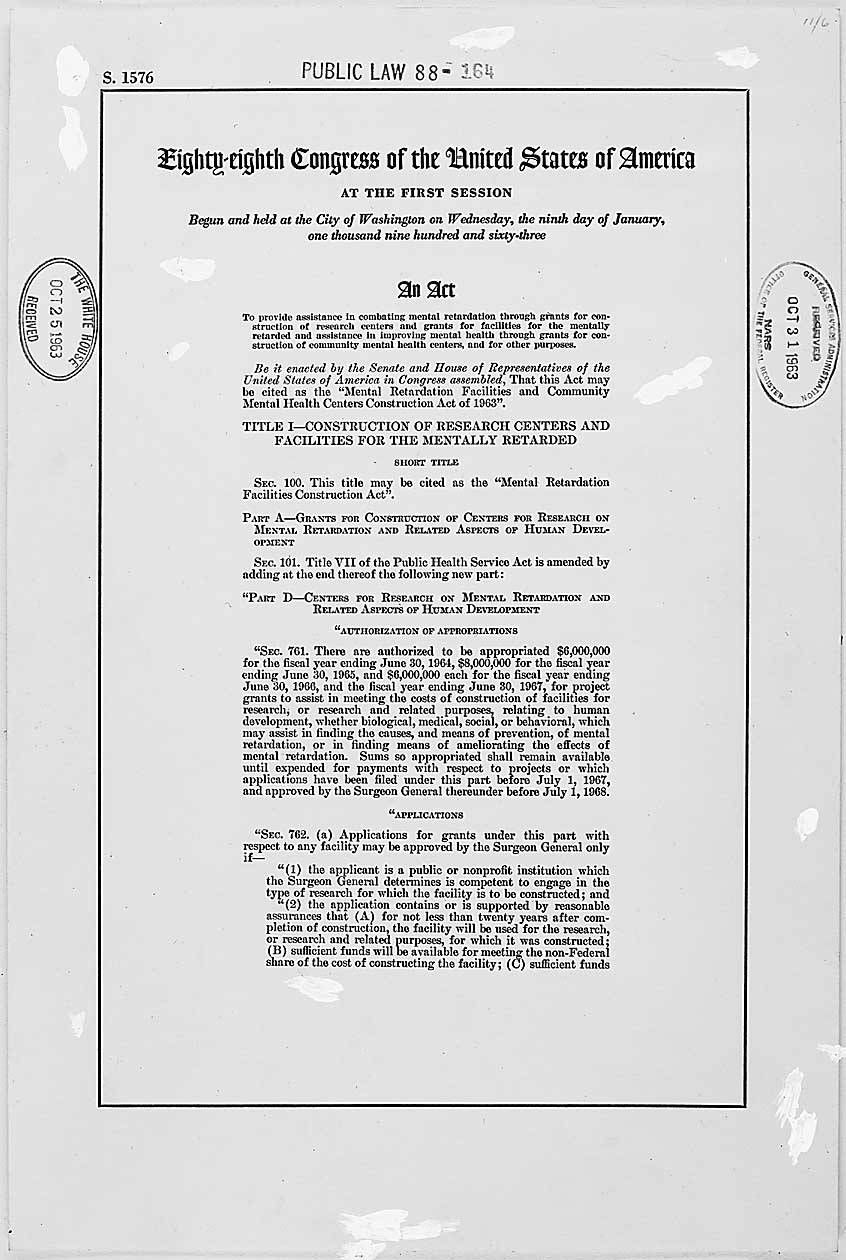
Act of October 31, 1963 “Mental Retardation Facilities and Community Mental Health Centers Construction Act of 1963”, Public Law 88-164, 77 STAT 282, “to provide assistance in combating mental retardation through grants for construction of research centers and grants for facilities for the mentally retarded and assistance in improving mental health through grants for construction of community mental health centers, and for other purposes.”, 10/31/1963 (Figure 1 below)

History of Psychiatric Treatment

Figure 1: Mental Retardation and Community Mental Health Centers Construction Act of 1963

Early attempts to treat mental illness are thought to date back to 5000 B.C. or earlier, based on the discovery of trephine skulls. A series of barbaric practices followed for millennia. It is suspected that the first asylums were established around the sixteenth century. These early facilities offered no real treatment despite their primitive attempts at cures, consisting of the use of leeches, purges, barbaric contraptions, and the use of chains and other restraints. Conditions gradually began to improve by the mid 1800s thanks to efforts led by humanitarians such as Dorothea Dix. Treatment reform in the asylums offered a more humane approach to the care of people with mental illness.

New treatment options followed in the early twentieth century, including psychoanalysis, introduced by Austrian neurologist, Sigmund Freud, and electroconvulsive therapy, introduced by Italian neuropsychiatrists, Ugo Cerletti and Lucio Bini. Psychopharmacology followed, arguably providing the single most significant change in treatment to date. A former colleague, psychiatrist, Dr. John Wolaver, remarked that when Thorazine was introduced in the psychiatric hospitals, the facilities were suddenly calm and quiet for the first time. It seemed to be a miracle cure. Psychopharmacology provided the next necessary step that led to deinstitutionalization.

The introduction of the Mental Retardation and Community Mental Health Centers Construction Act of 1963, Public Law 88-164, a bold new effort,  forever changed the face of mental health treatment. Prior to this, it was not uncommon for individuals with behavioral health conditions to be hospitalized for many years; hundreds of thousands lived their lives in institutions and were buried on the grounds. Unfortunately, this deinstitutionalization effort fell short of its goal. The USA Today report, Kennedy’s Vision for Mental Health Never Realized, takes a candid look at this.

Figure 2 below illustrates the decrease in inpatient treatment between 1950 and 1995. As the psychiatric hospitals decreased in size, the homeless population grew. The jails and prisons began to fill with the individuals with behavioral health conditions. According to the 10/24/13 article, Why Are The Three Largest Mental Health Care Providers Jails? published by NewsOne:  The three largest mental health providers in the nation are the following jails: Cook County in Illinois, Los Angeles County and Rikers Island in New York. 

Figure 2: Deinstitutionalization

Integrated Care

Many thought-leaders believe that we have embarked upon another pivotal point in mental health (or more broadly, behavioral health) treatment. Mental Health: A Report of the Surgeon General published in 1999 called for the integration of behavioral health and primary care. And the 2006 NASMHPD report, Morbidity and Mortality in People with Serious Mental Illness has prompted the movement toward a whole health approach to treatment that integrates behavioral health and primary healthcare. This promising trend offers hope for improved access for individuals who live with mental health and/or substance use disorders, improved health outcomes, and controlling healthcare spending.

Let us work together to address health conditions wherever the individual presents for treatment. Healthcare must be redefined to include behavioral health. By removing the healthcare silos, providers will begin to recognize and treat the comorbid conditions in their patients. Mind-body integration improves patient outcomes and reduces costs.

Integrated care is necessary for improving the lives of of those who might have spent his or her life chained in a dungeon centuries ago. It is a key element in our efforts to achieve the Triple Aim.

collaborative care

CFHA Blog: Collaborative Care Is An Evidence Based Treatment Model For Depression And Anxiety

Collaborative Care Is An Evidence Based Treatment Model For Depression And Anxiety

Posted By Pamela Williams in CFHA* Blog

As readers of this blog are well aware, depression and anxiety “are a major cause of disease burden and disability with depression projected to become one of the three leading causes of burden of disease by 2030.” It is estimated that 90% of people who suffer from depression and anxiety are treated solely by their primary care physician, and the majority of these interventions are exclusively pharmacological. Many people also report being unsatisfied with the level of care they receive. While these facts point toward collaborative care being a logical and effective treatment model for depression and anxiety, there was not enough research that provided conclusive evidence to support recommending collaborative care for those with depression and anxiety problems until this year.

Click here to read the complete story on the CFHA Blog

*Collaborative Family Healthcare Association (CFHA) promotes a comprehensive and cost-effective model of healthcare delivery that integrates mind and body, individual and family, patients, providers and communities. CFHA achieves this mission through education, training, partnering, consultation, research and advocacy. 

behavioral health integration · behavioral health primary care integration · collaborative care

Mental Illness Awareness Week: Raising Awareness of the Need for Integrating Behavioral Health and Primary Care Services

Mental Illness Awareness Week, October 7 – 13, 2012

In the US the first week of October has been recognized as Mental Illness Awareness Week since 1990 when it was established by Congress in recognition of the National Alliance for Mental Illness’s efforts to increase public awareness about mental illness. Mental Illness Awareness Week also coincides with similar organizational campaigns:

There is no doubt that this campaign has been a successful one, raising awareness, encouraging people to screen for depression, and chipping away at the negativity surrounding mental illness. This theme is aligned with the philosophy of behavioral health integration. Therefore, perhaps a day can be designated for recognizing the importance of integrating behavioral health and primary care services. When physical health and behavioral health are addressed concurrently, people have better health outcomes and are better satisfied with their healthcare services. Integrated healthcare also offers improved access to services and reduces healthcare costs.

Integration has been referred to as the neck; a means of reconnecting the mind and body. In integrated healthcare, the mind and body are addressed as a whole, rather than compartmentalized. There is a focus on prevention and wellness that promotes improved health outcomes. Across the United States and around the world, behavioral health and primary care providers are transitioning service delivery to a more collaborative approach. The United States Department of Health and Human ServicesSubstance Abuse and Mental Health Services Administration has invested in nearly 100 initiatives in their Primary and Behavioral Healthcare Integration grants. This commitment demonstrates the importance placed on integrated healthcare by the United States.

Perhaps we can designate each Friday of Mental Illness Awareness Week as National Behavioral Health and Primary Care Integration Awareness Day.

What do you think?

behavioral health integration · behavioral health primary care integration · healthcare integration

Integration of Behavioral Health and Primary Care: Preparing for Service Delivery

When your behavioral health and primary care integration partnership has worked through the preliminary groundwork for integrating services (click here for more information on planning), it’s time for preparing for the delivery of the services. The detailed outline created in earlier steps becomes your business plan. The plan serves as a map of the partnership’s goals and provides direction for delivering services.

Formalizing the partnership

When two organizations are collaborating for providing integrated services, it’s important to understand the legal and regulatory requirements. Working through this process should include consultation with an attorney. The following resources provide additional information for consideration:

Service Delivery

Once the legalities have been addressed, including the signing of a Memorandum of Understanding, Business Associates Agreement, etc., it’s (finally!) time to establish a start date and prepare for the delivery of the much needed services. The preliminary work, though tedious at times, was necessary to ensure the success of service delivery.

Careful planning is the hallmark of successful healthcare integration!

Through the careful planning of the behavioral health and primary care providers, they are ready to offer services in a more holistic manner. With co-morbid behavioral and physical health conditions more often the rule rather than the exception, the newly integrated services enable the team to provide much more comprehensive care coordination in this behavioral health and primary care marriage than either partner could have done independently. The whole is greater than the sum of its parts!

Celebrating Success

Once the equipment and supplies are in place, staff training is completed, and the start date has been announced to internal and external referral sources, it’s time to celebrate!

Celebrating important milestones is very important for ongoing success. It is an opportunity to strengthen relations among the healthcare integration team. Also, celebrating milestones is a valuable opportunity for leaders to re-energize their employees around the partnership’s Strategic Objectives by thanking the people who helped make the achievements happen.

Though things won’t always be harmonious, the partnership can persevere the difficult times through establishing a strong core to build upon. As discussed in The Partnership: Creating a Solid Foundation for Successful Healthcare Integration: “A partnership that has the solid and flexible foundation that is necessary for a lasting partnership” will weather the inevitable storms ahead.

If we are together nothing is impossible. If we are divided all will fail.
–Winston Churchill

healthcare integration

Health Information Technology and Healthcare Integration

Health information technology (HIT) is important to healthcare providers for a variety of reasons, not the least of which is for complying with Medicare and Medicaid Electronic Health Records (EHR) Incentive Program requirements.

HIT is critical to the success of health homes and healthcare integration, allowing behavioral health and primary care providers to share information. This sharing enables healthcare providers to have access to all available healthcare information related to the individual being served. And this, of course, results in improved health outcomes. The SAMHSA-HRSA Center for Integrated Health Solutions has a wide array of HIT resources: click here for more information.

The Past

Not too many years ago, healthcare providers were handwriting or dictating their progress notes. When patients were seen outside the office, or if the notes were not yet filed in the chart, the limited amount of information available created a challenge to providing the best care. A patient who was unable to provide a thorough medical history was being treated blindly in some regards. And health implications aside, numerous medical procedures were repeated due to lack of access to the reports. Duplication of the procedures drove up healthcare costs.

In addition, the sharing of information between providers was the exception rather than the rule. Coordination of care between providers for patients referred to specialty care was not reimbursed and, as a result of limited resources, less than ideal. This brief history lesson on medical records serves to illustrate the value of electronic health records and health information technology.

Fast Forward to the Present

Though far from ideal, the healthcare industry is making great strides in health information technology, including health information exchanges (HIEs) designed to facilitate the sharing of data. Despite the rapid progress, sharing information continues to be a challenge for behavioral health and primary care organizations. These integration efforts create unique challenges, largely due to problems with sharing information between two systems. The electronic health records (EHRs) used by primary care providers are seldom compatible with EHRs used by behavioral health providers. While some partnerships have implemented means of addressing this (work arounds), such as a third system to link the two or “home grown” alternatives, there are currently no ideal options available.

These noble community providers persevere however. They are well accustomed to dealing with challenges in the quest for pursuing their mission. People with serious mental illness are dying prematurely; and has been inadvertently perpetuated by this lack of information sharing. In an attempt to be respectful and responsible with healthcare information, limitations (and misunderstandings) have impeded information sharing. The Health Insurance Portability and Accountability Act of 1996 (HIPAA), Public Law 104-191 and Title 42: Public Health Part 2—Confidentiality of Alcohol and Drug Abuse Patient Records, also known as 42-CFR Part 2, are the most frequently cited reasons for not sharing information. These federal regulations cite guidelines for confidential health information. Though intended to provide clarity, healthcare organizations have interpreted the regulations very conservatively.

The Future

HIT has changed the face of healthcare and holds great promise for the future of behavioral health and primary care integration. Health information technology is not only providing cost-effective means of providing superior collaborative treatment, it is paving  the way for reducing the health disparities for people with serious mental illness and other behavioral health conditions.

behavioral health integration · behavioral health primary care integration

For Better or for Worse: Honoring the Partnership in Behavioral Health and Primary Care Integration

“I now pronounce you…Integrated.”

The early days of the integrated healthcare relationship are typically idyllic, filled with smiles and hopes and dreams. Oh, if we could only maintain that blissful state forever…

Unfortunately relationships don’t maintain a static pattern but are interspersed with disruptions on occasion (or frequently). When these disturbances intervene, the blissful state is challenged.

These are the times that try administrators’ souls.

For a partnership to persevere the inevitable challenges, the basic foundation must be solid.  Just as skyscrapers are built with deep foundations that are not only solid but allow flexibility to prevent collapse when severe environmental or other hazardous conditions erupt, the integrated partnership requires a carefully developed, yet flexible foundation. With a firm core, the relationship has the elements in place to withstand challenges that are sure to occur. (Click here for more information on building a successful behavioral health – primary care partnership.)

Sustainability Planning

Sustainability plans are often synonymous with financial sustainability but will occasionally focus on health information technology in the planning as well. The partnership itself, however, is often overlooked in the sustainability plan. This is unfortunate because if the partnership fails, the plan is rendered moot. The actual partnership itself is taken for granted after the initial honeymoon phase. This is a grave mistake for true sustainability.

Consider this scenario:
Due to internal operational and fiscal needs, the behavioral health partner’s executive team has decided to reassign the integrated BH counselor who has been working in the primary care clinic for two years. The counselor will be replaced with another counselor who is more experienced and is credentialed in both mental health and substance use disorders. Seeing this rearrangement as a win-win, the behavioral health partner is shocked and confused when they hear that the primary care partner, in reaction to this news, is considering hiring their own counselor instead of accepting the replacement counselor. There are even rumors that they might pull out of the partnership.

What went wrong?

  1. The behavioral health partner failed to include the primary care partner in the discussion, thus failing to honor the relationship; the primary care partner felt disrespected.
  2. Rather than express concern to the behavioral health partner, the primary care partner took a reactionary approach instead.
  3. Unaware of behavioral health partner’s internal issues, the primary care partner assumed the worst.
  4. The behavioral health partner failed to understand the value of the individual to the team, not just for the service provided. Counselors are not interchangeable. The counselor was viewed as a valued member of the primary care team.
  5. The executive teams of the partners stopped communicating after the partnership was launched, resulting in a weakening of the committment by each partner.

The list could go on.

This partnership, though financially sound, has neglected to nurture the core relationship. As long as things were going smoothly, the partnership appeared to be successful. Unfortunately, a slight disruption to the routine has threatened the weak core of the partnership. In addition to the obvious lack of effective communication taking place in this dysfunctional relationship, there are other factors also present that are all too common in partnerships:

  • Lack of commitment
  • Lack of respect

Commitment and respect underscore the core requirements for longevity.

Commitment

All partners must be committed to ensuring that integration efforts have the necessary tools for success. This includes the committment of time, not just financial and other resources. When the commitment is present, there is no concern over “fair weather friends” syndrome.

  • Are you prepared to make sacrifices necessary for success?
  • When the going gets tough are you still committed?

Respect

Basic respect is crucial. Your partner has many challenges and concerns that are unrelated to your partnership. Respecting that these are important to your partner whether or not you can fully recognize the impact goes a long way toward being a good partner. Taking the time to gain a better understanding is even better.

  • Do you have a thorough understanding of your partner’s business model?
  • Do you understand the challenges that your partner faces specific to the specialty such as regulatory, operational, clinical, etc.?

Why are these things important?

Understanding and honoring the things that are important to your partner organization strengthens the core of your relationship. Remember, the Golden Rule applies to behavioral health and primary care integration partnerships, too.

behavioral health integration · behavioral health primary care integration · primary care behavioral health integration

No Margin No Mission: Sustainability in Behavioral Health – Primary Care Integration

Of the many challenges in integrating behavioral health and primary care services, the one that garners the most apprehension and concern is sustainability. It is also the most frequent reason for hesitation in moving forward. Healthcare is not set up to address this. Primary care and behavioral health have different billing codes with no easily decipherable means of venturing outside the confines to include payment for integrated services. The mere thought of the process required to begin to tear down the barriers separating the two worlds strikes fear in the hearts of the most courageous administrators.

Healthcare administrators are presented with conflicting demands and are struggling to reconcile the next step. They can:

  1. Ignore the ever increasing focus on healthcare integration and hope it is just another passing fad; or
  2. Place even more burden on the ever-shrinking budgets and hope for the best.

Let’s take a closer look at the options:

Ignoring healthcare integration seems like the easiest solution. Administrators can align themselves with like-minded peers creating a support group who reinforces the notion that it will all just fade away if they merely wait it out. This group gets considerable pleasure in observing the early adopters from a distance, filled with certainty that they are all making huge mistakes. They pat themselves on the back encouragingly as they watch their naïve peers make the occasional fumble, while attributing any successes to sheer (unsustainable) luck.

Over-burdening the current budget seems to be irresponsible. Behavioral health administrators have been faced with budget cuts in unprecedented amounts over the past few years. While they have either become masters at doing more with less or have chosen to leave the field entirely, taking on a new business-line during the increasing uncertainty of their organizations’ financial states seems to be overly risky and counterintuitive.

Yet the pressure is on.

Nationally, more and more behavioral health conferences are featuring healthcare integration tracks. The same is becoming true of primary care conferences and conventions as well. With more and more research and reports being released that provide the necessary data to support the need for integration, it’s becoming more and more difficult to write it off as a passing fad. The recent report from the SAMHSA-sponsored, National Survey on Drug Use and Health, Physical Health Conditions among Adults with Mental Illnesses provides further evidence supporting earlier reports demonstrating the need for integration.

The current model of providing behavioral healthcare may be on its way to becoming obsolete. Now is the time for behavioral healthcare administrators to begin the discussion of how to address the whole-health needs of the people they serve. Whether through collaborative partnership agreements, bi-directional integration, or full integration, this issue can no longer be ignored. There are many changes that can be implemented right away (focusing on billing codes and maximizing billing opportunities) while others will require advocating changes at the state and federal level. (Click here for helpful billing tools created by the SAMHSA-HRSA Center for Integrated Health Solutions.) Daunting though this may seem, the climate is right for these discussions with your state Medicaid and behavioral health offices. They are faced with the task of making the necessary changes to move into the new era of healthcare integration. Strategically, it’s far better to be a part of discussions on creating this new structure than to have it imposed on your organizations. The Georgia Association of Community Services Boards has partnered with the Carter Center to create a forum for change in Georgia via their Integrative Healthcare Learning Collaborative. Not only have they included the public behavioral health providers and their primary care partners, they also have representation from the Georgia Primary Care Association and area medical schools.  They recognize that in order to develop sustainable programs everyone must be at the table.

What are your strategies for sustaining healthcare integration?
I’d love to hear from you. Please enter your comments/suggestions/ideas below or email: behavioralhealthintegration@gmail.com.

Let’s not lose sight of the goal: we must work together to make a difference in improving health outcomes of the people we serve. We CAN ensure that the margin is there to continue the mission. Be a part of the solution!

behavioral health integration · behavioral health primary care integration · collaborative care · healthcare integration · primary care behavioral health integration

UPDATE: The Greatest Challenges for Integrating Behavioral Health and Primary Care Services

The recent poll conducted via the LinkedIn group, Behavioral Health Integration, continued to generate thought-provoking comments following the last post. (Click here to see the initial results.) Thought-leaders, behavioral health, and primary care professionals have offered their perspectives on the pressing question:

WHAT IS THE GREATEST CHALLENGE FOR INTEGRATING BEHAVIORAL HEALTH AND PRIMARY CARE SERVICES?* 

Mark L:  Community health records (CHR) that follows the patient and not the provider or payer source will create the sustainability –finance and billing that aid Partnerships to create better operations/workflow that in turn solve workforce issues.
I think the solution for integration of health care is an IT solution that allows for communication not in any “one” silo but in a cloud, it is the premise of the question about integration that it will be in a silo that leads to obsolescence or a least does not address systemic issues of communion about the actual needs of the patient first.

  1. Providers at all levels of care need to exchange information both horizontally and vertically, such as a transfer of care to another provider at a higher or lower level of care. Also community integration of available resources for discharges from one provider to the next or transitions to the public systems from private system or vice versa.
  2. The public and private sectors need to work together to “speak the same IT Language” the health record should follow the person in any system.
  3. Acute care and mental health care systems need the same ability to communicate, whether or not you call the person a client or patient. Mental health and acute care providers can then communicate and bill on a “continuity of care” coordinating treatment for a patient as a team and not in silos.
    The export of data from one CHR to the next is where standardization needs to be the focus. I am excited to see future of blending of Regional Health Information Organizations (RHIOs), Health Information Exchange (HIE). RHIOs and HIE are changing the discussion from silos to clouds.

Leslie B: This may be one of my favorite topics. Yes, I agree that IT can play a part of it, but that is not the only part of the system that needs to change. Like one of the members of discussion, the providers and their ability to talk to each other is one. Program Development requires system and staff changes, changes in thinking, and the ability to assess each site. Each Primary care setting has its own challenges, so one can say provider insight at one location and Behavioral Health provider readiness at another location and yet another location might have the inability to see each other’s records or there may be a staffing problem. I think the biggest challenge can be who is going to pay for it, once everybody in the system figures out what it is anyway. It may require more behavioral health providers and more medical providers. Will there really be a return on that investment. The patient would probably get more holistic care, but it isn’t going to cost any less money.

Bob H:  I believe that one of the greatest challenges is that we need to stop talking about behavioral health and primary care and begin focusing on the needs of the individuals receiving our services and how our systems can best serve their needs. We need to include clear measures of ‘behavioral economics’ and understand that we all act and react to rewards and benefits. We need to structure our systems and our interventions to incentivize overall health improvements, whether behavioral or medical.
We will only have truely intregrated care when we are patient centered and stop distinguishing between behavioral health and primary care. That does not mean that we will not have specialists; whether they be psychiatric, medical, communication, design, or information and technology. It is all about the focus on the patient’s needs and building workflows to address those needs appropriately to assist them in reaching productive and effective outcomes as a result of our services and interventions.

Nelson B: In short, the greatest challenge of healthcare integration is getting paid for effective services. Coleman Professional Services will look at the best outcome of our customer; their health, their ability to have stable living conditions, volunteering or employed and their ability to appropriate socialize in their community. Let’s look at the outcome for our customer and get paid for this outcome.

Michael J: Reading this thread shows that there is a great deal of thought being put into this topic. I think that some of this boils down to a chicken and an egg. And Nelson is right on target about the pay systems. We in our industry have not truly integrated mental healthcare and addictions treatment. Now I know there are pockets of good co-occurring treatment programs here and there, but as an industry they continue to be separate. And the biggest reason is following the money. The money for these services are not braided, and so they stay separate.
I’m currently working on a perinatal mental health integration project. We know what to do clinically (we are using the IMPACT model) and we have OBs who want to participate. We have Medicaid insured women we have identified as needing care. But since the Medicaid is carved-out, the physical health Medicaid plan will not pay for the service as they don’t pay for MH services, and the MH plan won’t pay because they don’t purchase physician services from non-psychiatrists unless they are credentialed as a part of a licensed agency with a MH contract. If the insurance companies and the government wanted to have integrated healthcare, they would have it. If there was a requirement that integrated care was insisted upon for reimbursement we would be all over it. In fact, we do all sorts of odd things now to respond to external requirements that have absolutely nothing to do with the delivery of care. So I have to believe that once the system starts demanding integration it will have it. The system gets what the market commands. The reason there are no solid IT solutions that can incorporate MH and PC is because the market doesn’t demand it. But vendors will respond when that’s required or they will be out of business, just like we would be if the demands were levied upon us and we didn’t respond.

Bob F: This has been a great discussion Cheryl – thanks for posting it. I read the responses from the other groups where you posted this question as well. It seems there isn’t necessarily an individual “biggest” challenge that organizations face versus as much as a varying number or group of issues that organizations face depending on a variety of factors: state environment, organizational structure, readiness to change, internal infrastructure, willing partners, etc. One of the keystones of integrated care is that our patients come to us fully assembled, and our treatment/wellness/prevention response to them has to be, in turn, as fully assembled in order to be effective. And efficient. Clearly the challenge we face in just about every region of the country is that the obstacles are likewise effectively assembled. At Cherokee Health Systems here in TN – even after running an integrated system for over 30 years new challenges surface all the time, chief among them payers who shift priorities from contract to contract, workforce (less primary care docs and psychiatrists all the time), finding time to be innovative in the development of such practices as telehealth, telepsychiatry and telepharmacy, etc. When we do our training academies we focus on all of these issues – administrative, operations, financing, workforce, PC-BH collaborations, model development – because we understand that it is almost never a single obstacle. Anyway – great to follow along and see the efforts being undertaken out there!

David R: New EMR processes are forcing medical case management accountability. Behavioral health case management processes are a generation behind medical and will require a sizable accountability shift for clinical participants.

*The question was also posted in these LinkedIn groups: Behavioral Healthcare Magazine Group, Mental Health Networking, The Friends of SAMHSA.

The poll results demonstrated a shift: with 44 total votes, Partnership has demonstrated a considerable increase, closing the gap on Sustainability.

POLL RESULTS:

Sustainability — finance and billing           38%

Partnership issues                                           31%

Workforce issues                                              7%

HIT issues                                                         5%

Operations/workflow issues                         18%

Without a doubt, each of the five factors is very important for successful integration. The next blog post will take a look at overcoming these challenges.

What do YOU think is the greatest challenge for integrating behavioral health and primary care services? Please send your comments to BehavioralHealthIntegration@gmail.com or visit Behavioral Health Integration

behavioral health integration · behavioral health primary care integration · collaborative care · healthcare integration · primary care behavioral health integration

The Greatest Challenges for Integrating Behavioral Health and Primary Care Services

In a recent poll conducted via the LinkedIn group, Behavioral Health Integration, this question was posted*:

What is the greatest challenge for integrating behavioral health and primary care services? 

POLL RESULTS:

Sustainability — finance and billing           50%

Partnership issues                                          23%

Workforce issues                                             11%

HIT issues                                                          3%

Operations/workflow issues                        11%

The question produced a number of excellent comments that are listed below. Obviously there are differing opinions about the greatest challenge for integration. The most important factor is that the healthcare community is actively thinking about this very important topic! There is no easy solution. However, as long as we continue to move forward we will establish the path to success. It’s a challenge that is worthy of our efforts. We WILL make a difference.

What do YOU think is the greatest challenge for integrating behavioral health and primary care services? Please send your comments to BehavioralHealthIntegration@gmail.com or visit Behavioral Health Integration

Peggy H:  Hmmmm. And possibly beneath it all is the issue that both systems are needing to care for an overwhelming number of people, with increasingly complex needs, in the first place. I have only recently joined, but am eager to learn more about how policy, the priorities it sets and the direction it gives to financing, is shaping critical features of integration efforts.

Joseph B:   In my mind, until the silo mentality for benefit and payment is integrated, there can not be true clinical integration. In settings where integrated payment has been settled (VA, Kaiser, ACOs), all other issues solve themselves.

I believe that carved-in, risk sharing financial models are the solution to integration

Bob F:  I think Dr. B is directly on target. Risk sharing models – capitated systems, shared savings models – can encourage better integration between modalities. Fee for service and carve outs fail to capture the true essence of integration – the vital “almost billable” services like warm handoffs, hallway consults, follow up phone calls, and the treatment team meeting; not to mention the varied allowable services among the states pertaining to same-day billing, discipline/credential requirements, etc. Trying to pound the traditional mental health square peg (with all of its burdensome documentation requirements) into the primary care round hole is not the answer – and just pounding harder with a bigger hammer is definitely not the answer.

Lena Z:  I work for a pediatric health care system in Texas and we have only been able to deliver this type of service under grant funding…which was recently stripped away prematurely by the state of TX.

Bob F:  It’s frustrating, isn’t it Lena? What we’ve found in TN is that it’s all about what you negotiate in your contract; the payers have latitude to “turn on” certain codes, allow for different funding arrangements/systems – but the provider has to be able to have the data and show the outcomes. The payer can also do some cost comparisons of your services versus your neighboring providers/competitors – that is the key. If you can get them to share their data in comparison with yours and can show those savings and improved outcomes – you have better leverage. We also learned that we were never going to be in a position to negotiate until we had a big enough member panel. It’s a battle well worth fighting – and one that is never truly won. Or lost.

Cheryl H:  Each of the issues can and often does create barriers for behavioral health and primary care integration. Sustainability is the area in which most providers tend to focus for obvious reasons: No margin no mission. However, too often concern over sustainability becomes the primary focus, diverting attention from the other issues causing them to be neglected:

  • Partnership issues have brought about the demise of many promising partnerships. For long-term success, behavioral health and primary care partners must address establishing the mission for the partnership; identify a common language; maintaining pacing, flexibility, and capacity; develop shared solutions; determine expectations; delegate trust; create empowerment; and measure outcomes.
  • Workforce issues can create significant barriers to successful integration. Service provision in the integrated environment varies greatly from services provided in traditional behavioral health and primary care organizations. Training programs for current and future workforce is necessary for long-term success.
  • Health information technology issues create significant challenges for healthcare integration. Challenges created when partners have incompatible electronic records and other issues with record sharing inhibit successful integration.
  • Operational issues such as workflow can impact productivity, creating further challenges to sustainability.

With commitment among all stakeholders, successful integration of behavioral health and primary care can be accomplished. The resulting improvement of health outcomes for people with behavioral health disorders makes it worth all the effort.

Cindy M: As I think about this and read all your comments, I’m now thinking that the biggest challenge depends a lot on the people who are facing that challenge. I voted “workforce” because I’ve thusfar been able to find ways to deal with the silos in the back office so that they are transparent — or CAN be, at least — to the clients and possibly even the service delivery staff.

The biggest problems I’ve had are in teaching my fiscal dept. staff to think “integration” on the front line while complying with the silo mandates in the back office. Then there are the issues with some — not all, by any means — clinical and service staff who either are flummoxed a bit by the concepts and practices they have to integrate OR are stuck in “we don’t do that” gear.

The finance structure and silos are what I lose my religion over, but (apart from the unlucky fiscal staff) don’t need to interfere with anyone else. In dealing with THAT, I still find the main determinant to success or frustration being the persons I have to deal with at the governmental offices with whom we’re contracting. Some are very creative in helping create ways to make it work and others just AREN’T. Those ones do not help me find ways to create an “integration effect” without having an actual integration on the finance side. Which, again, is a work force issue.

Long story short: in my experience, integration has been as good as the people in charge of making it happen.

Stephen W: Great question. From an information system perspective, the greatest challenge is finding a software vendor that handles both BH and PC effectively. CCHIT has certification standards that address both BH and Ambulatory Care. These standards are more stringent than MU certification. I would start there and only look at those vendors that are certified in both.

Joseph P:  I see a legacy of “carving out” behavioral health from medical benefits as segregating the two. Now that the value of treating diseases with high levels of psychological cormobidity is well established there will be a need to embed behavioral health with primary care much in the manner demonstrated by bariatric and transplant programs. Behavioral health specialists will need to provide brief cogent consults to PCPs and brief strategic interventions to patients focusing on patient education, compliance and stress/pain management in addition to more traditional psychological care. Insurance reimbursement can target shared risk/rewards for health care homes that provide this multidisciplinary approach.

Bill H:  I don’t see it as a greatest single challenge as much as a multitude of challenges that require coordination, planning and leadership. I generally recommend starting small and building on successes. Once you effectively implement integration in one area, you will create a demand for similar services in other areas. Finding the right location to pilot a program that has a clinical need and a physician champion provides a great place to start an integration program. Would be happy to discuss integration in more detail.

I am currently working on developing a behavioral health model for accountable care organizations. Thoughts on that topic??

Karen M: The largest challenge I had dealing with both was a very direct problem but I do not think their is a simple and straightforward way to handle it. I found when working with Behavioral Health and also co-morbid medical cases I had a lack of communication between providers. This communication was the single item that told me whether a case would be successful or not. The willingness of providers to communicate is paramount to success and I know that isa complicated issue due to the fact physicians
and other professionals do not get paid for consultation but that leads me to believe some changes need to be made.

Joseph P: I am currently director of a multi-facility, multi-state program that offers integrated outpatient medical and behavioral health care to members of a Medicare Advantage program. We provide urgent ED level and ongoing complex care in conjunction with hospitalist service. This allows members a continuum of care that augments that provided by their PCP. PCPs have their HEDIS metrics improved (with higher level of reimbursement), patients receive excellent care that reduces inappropriate ED and hospital admissions and the insurance company reduces unnecessary costs. Behavioral medicine in these advanced care center focus on compliance and psychological factors that affect physical conditions. This type of program is likely to become a model of how care will be provided in the future as the carriers invest more dollars in better integrated healthcare as a wy of controlling inappropriate costs related to inappropriate higher level of care

Jim H:  Possibly not the greatest challenge, but still a significant one is to provide an environment that is safe for patients who may have self-harm or suicidal tendencies. According to studies by the American Psychiatric Association we were averaging 1,500 inpatient suicides per year in 2003 and that number has increased to 1,800 by 2008. That averages just under 5 inpatient suicides per day. The typical med/surg hospital unit provides many opportunities for suicide and access to items that may be used by patients to harm themselves or others.

The American Society for Healthcare Engineering (ASHE) published a monograph last year that addresses this issue titled “Converting Medical/Surgical Units for Safe Use by Psychiatric Patients”. This is available for purchase on their website at http://www.ashe.org.

Also the National Association of Psychiatric Health Systems (NAPHS) publishes the “Design Guide for the Built Environment of Behavioral Health Facilities” that is available free of charge at either their website (www.naphs.org) or mine (www.bhfcllc.com). I am the co-author of both publications and I also offer free 30 minute phone consultations on patient and staff safety in behavioral health facilities.

Jay O:  I’ve built several counseling centers and consulted for a lot of physicians. From my perspective, there are a number of issues that make it difficult, but could be overcome. Therapists in general are used to working in isolation. They typically do not communicate well with physicians and many are frankly afraid to do so. This can be overcome through training therapists how to adapt to a faster paced primary care setting.

I’ve embedded counselors in several primary care offices with some success. Patients feel less stigmatized going to a primary care office. There still needs to be strong referral patterns developed internally. Even with a therapist present, physicians still need to develop the habit of having a referral conversation with their patients and make a referral for an assessment. Alerts could be set up in EHR to remind the physician to do this when they prescribe psychotropic medications.

On the business side, a lot needs to be worked out to integrate with a practice. Medical space is often more expensive than a therapist can afford. The ROI on this space may be very low for the therapist, but high for the physician. If the space is unused, then it can be subleased at a reduced rate, otherwise it would not make financial sense for either party.

In general, therapists are not as good at creating business relationships and resolving operation issues that would need to be worked out to integrate with physician offices. These trends can be overcome with some training and coaching of the counselors.

Denise S:  My position as a Behavioral Health Specialist was created to do just that to work as a link between Behavioral Health and the Medical Case Management Teams.

Bill H:  A resource on the topic is: Understanding the Behavioral Healthcare Crisis: The Promise of Integrated Care and Diagnostic Reform. The book was edited by Cummings and O’ Donohue and published in 2011.

Scott W:  A major challenge is the same challenge that exists in integrating primary health with any specialty area. Healthcare providers are largely oriented to focusing on the problem at hand, and do not necessarily feel able or equipped to take the time to understand the relationship between the various health problems a patient may have, including behavioral health. I believe to successfully integrate a patient’s different healthcare needs, there may need to be a professional (nurse) or paraprofessional (trained technician) who can serve as a care manager. Obviously, adding this expense would need to have some criteria and parameters to be cost effective.

Anyone who has an older family member or friend who has multiple health problems and a variety of medications knows that there can often be medical and/or psychiatric complications from the interactions of those medications. To me, and perhaps using an overly simple definition and context, integration means care management.

Ally L:  The medical field has not experienced peer/family/youth/young adult involvement to the same extent that mental health has. They don’t yet understand the value or that we as peers and family members can understand the complexity of integration. We have made great strides in this area within mental health (always more work to be done) but it feels like we’re starting at square one with medical professionals in the development of statewide integration, Coordinated Care Organizations and Health Homes that is occurring here in Oregon.

The other challenge is the medical model. Mental health has operated under the medical model for many years as far as billing (Medicaid and private insurance); however, there are other elements of the medical model that do not translate well when it comes to practice. For example, the measuring of outcomes. Recovery is more easily measured when we are looking at physical illness or injury. Recovery in mental health and/or addiction is more subjective. The person in recovery determines what recovery looks like for them, not whether the rash is gone or the broken bone has healed. A mental health professional or family member’s definition of recovery for their “patient” or loved one may be very different than for the person working toward their self-defined recovery.

Cindy L:  Reimbursement? I will be graduating in a year with my Psych Nurse Practitioner finding my place will be challenging

*The question was also posted in these groups: Behavioral Healthcare Magazine Group, Mental Health Networking, The Friends of SAMHSA. Several of the comments came from these groups.